
Navigating your daily commute demands a vehicle capable of handling diverse terrains and distances efficiently. An electric bicycle, particularly one designed for hills and rough roads, offers a practical solution. This guide presents key considerations and recommendations for selecting an e-bike that effectively addresses these challenges. You will find that careful evaluation of motor type, battery capacity, suspension, tires, and frame design is essential to making an informed decision.
The motor is the central component dictating an e-bike’s ability to conquer inclines and accelerate effectively. Its specifications directly influence your riding experience, particularly when faced with demanding conditions.
Types of Motors: Hub vs. Mid-Drive
When considering e-bike motors, you primarily encounter two configurations: hub-drive and mid-drive. Each offers distinct advantages and disadvantages, making one more suitable than the other depending on your priorities.
Hub Motors: Simplicity and Cost-Effectiveness
Hub motors are integrated directly into the front or rear wheel, applying power directly to the wheel’s rotation.
- Rear Hub Motors: These are the most common type of hub motor. They provide a push sensation, which many riders find intuitive. They are generally simpler in design and operation.
- Front Hub Motors: Less common, front hub motors pull the bike forward. They can create a two-wheel drive effect when combined with human pedaling on the rear wheel, offering increased traction on slippery surfaces. However, they can also cause less balanced handling, particularly when climbing steep hills.
Hub motors are typically more affordable to manufacture and often result in a lower overall e-bike price. Their design isolates the motor from the bike’s drivetrain components, meaning less wear and tear on the chain, cassette, and derailleur. This can translate to reduced maintenance requirements for those specific components. However, they can make tire changes more complicated due to the motor’s integration. Additionally, hub motors can sometimes feel less natural when climbing, as they apply power irrespective of your gear choice, potentially leading to a less efficient power delivery compared to mid-drive systems.
Mid-Drive Motors: Performance and Integrated Power
Mid-drive motors are positioned near the bike’s bottom bracket, at the center of the frame. This central location offers several performance benefits.
- Improved Weight Distribution: By placing the heaviest component (the motor) in the lowest and most central position, mid-drive bikes generally exhibit better balance and handling. This is particularly noticeable on trails and during sharp turns.
- Leveraging Gearing: A significant advantage of mid-drive motors is their ability to utilize the bike’s existing gear system. When you shift gears, the motor’s output also adjusts. This allows the motor to operate within its optimal RPM range, delivering power more efficiently and effectively. On steep climbs, you can downshift to a lower gear, allowing the motor to provide substantial assistance without overstraining it. This results in superior climbing ability and a more natural riding feel, emulating the experience of a traditional bicycle where your effort is amplified.
- Increased Torque and Efficiency: Mid-drive motors often produce higher torque numbers than hub motors of comparable wattage. This is due to their ability to leverage the bike’s gearing. The power delivery is smoother and more responsive, making ascents less strenuous.
- Easier Wheel Maintenance: Changing a flat tire with a mid-drive motor is no different than on a conventional bike, as the motor is not integrated into either wheel.
The primary drawbacks of mid-drive motors are their higher cost and the increased wear they place on drivetrain components. The continuous power output through the chain and cassette can necessitate more frequent replacement of these parts.
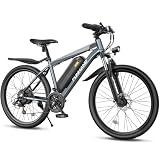
- 1000W Peak Powerful Motor: Funhang electric bike with a 500W(Peak 1000W) high-speed brushless motor delivers impressive power and performance, allowing you to conquer various terrains. Whether you're exploring new mountain trails, enjoying weekend joyrides, getting in a good workout, or handling your daily commute, this electric bike is built to be your reliable companion on the road.
- 48V Removable Large Battery: The EB-M1 ebike features a 48V 374.4Wh IPX5 waterproof Lithium-ion battery, giving you the confidence to travel up to 25-30 miles in full electric mode and 40-50 miles in pedal assist mode per charge. Riding range varies depending on the battery, riding style, rider weight and road conditions, etc. The removable and lockable design makes it convenient to charge on or off the ebike, fully charged in 4-5 hours.
- Safe Ebike Configuration: 26 inch electric bike for adults adopts a front shock absorber to smooth out bumps, rocky and uneven terrain. The smart LCD display provides real-time data, including battery life, current speed, mileage, pedal assist level and more. The added fenders protect your bike from mud and water. Other reliable e-bike designs like dual disc brakes, LED headlight, electric horn system and reflectors, safeguard your safety.
- Customized Riding Experience: The EB-M1 electric mountain bike offers 5 versatile working modes (Throttle, Assisted Bicycle, Normal Bike, Cruise Mode, and Booster Mode) along with 5 pedal assist levels. Simply select from PAS levels 1-5 or twist the throttle for a breezy ride, while the Booster Mode makes it effortless to push your e-bike when needed. Combined with the 7-speed gearing system, you can easily customize your speed and riding style to match any terrain.
- Easy Assembly: The 26" e bike for adults comes with a 12-month warranty and 85% pre-assembled with instructions and tools included. You can also follow the assembly video or user manual on our page to complete the rest parts. This electric bicycle comfortably suits adult and teen riders between 5’3”-6’1” tall and up to 300 lbs/135kg.

- Ride Longer Between Charges: The 48V 15Ah removable battery supports up to 70 miles of range for this electric bicycle, covering daily commutes, errands, and weekend rides. Built with UL-certified battery safety protection and water-resistant design, it recharges fully in about 5-6 hours.
- Climb with Less Effort: 2000W peak output and 99Nm torque help this electric bike deliver confident starts, hill support, and smooth assist for city streets, neighborhood roads, and mixed daily routes.
- Stay Comfortable on More Roads: This fat tire electric bike uses 20 x 4.0 fat tires and dual suspension to help improve grip, comfort, and stability on pavement, gravel paths, park roads, beach routes, and uneven streets.
- Carry More for Daily Plans: The rear seat pad supports short passenger trips, weekend rides with friends, errands, and cargo. With a 330 lb payload capacity and rider fit from 5.4" in to 6.3", RetroVolt 330 is built for shared daily use.
- Choose the Ride That Fits: Five riding modes and a 7-speed drivetrain let you adjust the ride for commuting, cruising, light outdoor routes, or pedal-assisted exercise without making the bike feel complicated.

- 𝗛𝗶𝗴𝗵-𝗣𝗲𝗿𝗳𝗼𝗿𝗺𝗮𝗻𝗰𝗲 𝟭𝟬𝟬𝟬𝗪 𝗣𝗲𝗮𝗸 𝗠𝗼𝘁𝗼𝗿: This electric bike comes equipped with a 1000W peak brushless motor for consistent power delivery during urban commutes and outdoor rides. It reaches a maximum speed of 20 MPH and handles moderate inclines smoothly. Suitable for paved city roads and casual trails, maintaining steady performance across varied pavement surfaces.
- 𝗟𝗼𝗻𝗴 𝗥𝗮𝗻𝗴𝗲 𝟯𝟳𝟱𝗪𝗵 𝗜𝗻𝘁𝗲𝗴𝗿𝗮𝘁𝗲𝗱 𝗕𝗮𝘁𝘁𝗲𝗿𝘆: Built around a 36V 10.4Ah high-capacity integrated battery, this commuter electric bike for adults delivers up to 40 miles riding distance on a single full charge. A full recharge finishes within 5–6 hours to support longer trips. Actual mileage varies based on rider weight, terrain and assist levels. An LED battery light strip improves nighttime visibility and adds sleek styling.
- 𝗥𝗲𝗹𝗶𝗮𝗯𝗹𝗲 𝟳-𝗦𝗽𝗲𝗲𝗱 𝗗𝗿𝗶𝘃𝗲𝘁𝗿𝗮𝗶𝗻: Designed with a precision 7-speed transmission system for seamless gear transitions. Adjust gears freely to match flat cruising, uphill climbs and downhill sections. This electric mountain bike adapts well to city streets, hills and mixed terrain for daily commuting and outdoor leisure rides.
- 𝟮𝟲×𝟭.𝟵𝟱” 𝗥𝘂𝗴𝗴𝗲𝗱 𝗧𝗶𝗿𝗲𝘀: These ebikes for adults use thickened 26×1.95 mountain tires with dependable traction and shock absorption. It delivers stable handling on city pavement, gravel roads and mountain trails for daily and outdoor cycling. Complete installation tools and tire pump are included to simplify routine maintenance.
- 𝗚𝟱𝟭 𝗦𝗺𝗮𝗿𝘁 𝗗𝗶𝘀𝗽𝗹𝗮𝘆 𝘄𝗶𝘁𝗵 𝗔𝗣𝗣 & 𝗨𝗦𝗕 𝗖𝗵𝗮𝗿𝗴𝗶𝗻𝗴: Upgraded G51 smart LCD dashboard clearly displays real-time speed, trip mileage and remaining battery power. Pair with the dedicated APP for convenient riding adjustment and status monitoring. The built-in USB port supports on-the-go phone charging, ideal for long commutes and outdoor camping trips.

- 1000W Motor & Upgraded Display: The EB5 electric bike equipped with a 1000W peak motor, boosted a top speed of 20 MPH. The display panel has adjustable backlight brightness from 1-5 levels. In addition, the upgraded LCD Display provides riding data support, such as ODO/MAX/AVG SPEED, PAS mode can be customized up to 3 modes
- Removable Large Battery: The EB5 e-bike is equipped with a 360 Wh battery, which covers a range of up to 25-40 miles per charge for 5-6 hours so that it can meet travel or daily commute needs. Removable battery makes charging more convenient whether you are at home or in the office.UL 2849 Tested for Safety.
- 4 Working Modes: PAS mode will assist you with a moderate amount of power as you pedal the bike, kick in 1-3 levels of pedal assist to suit your needs. In pure electric mode, you can twist the throttle in any increments of power you desire. Pedal mode allows the rider to pedal as an ordinary bike. Booster mode will help you push your EB5 at 4.5-7.5 km/h when uphill, which will save you a lot of efforts
- Riding Comfortably and Handily: The 26" puncture resistant tires are for greater durability. A high-strength front fork suspension, 7-speed gears, dual lights, LCD display, front and rear mechanical disc brakes can bring your riding more comforts, make your e-bike adapted to complex terrains and keep you safe
- Minimalist Appearance & Lightweight Frame: A highly efficient, city style affordable electric bicycle offering minimalist and sleek appearance and only weighs 49.6 lbs. The triangular high-carbon steel frame provides more stability

- Powerful 750W Peak Motor & 20MPH Speed – This Electric Bike is equipped with a high-torque 750W Peak motor, delivering rapid acceleration and a top speed of 20MPH. Whether you're commuting in the city or enjoying a leisurely ride, this E-Bike ensures a smooth and efficient journey
- Removable 48V 10Ah Battery – Featuring a long-lasting 48V 10Ah removable lithium battery, this Electric Bicycle offers extended ride time and convenient charging. Easily detach the battery for indoor charging and enjoy worry-free travel with reliable power.
- Pedal Assist & Dual Disc Brakes – Customize your ride with pedal assist, allowing you to switch between full electric, assisted pedaling, and manual cycling. The dual disc brakes provide responsive stopping power for enhanced safety in various riding conditions.
- Compact & Foldable Design – This Foldable E-Bike is designed for urban commuters and travelers. Its quick-folding frame makes it easy to store in your car trunk, carry on public transportation, or tuck away in small spaces—perfect for daily commuting and city rides.
- Durable 14" Wheels & Comfortable Ride – The 14-inch wheels offer stability and smooth handling, while the sturdy frame ensures durability. Whether you're navigating city streets or paved paths, this Folding Electric Bike provides a comfortable and reliable riding experience.

- 【Excellent Motor Performance】This electric bike is equipped with a high-performance 749W motor(2000W peak) with 2 to 3 speed settings, capable of meeting your daily commuting and off-road riding needs—so you never have to worry about speed
- 【Upgraded Removable Battery】 Powered by a 48V 15Ah removable battery, the ebike can be fully charged in just 6-7 hours and can ride up to 60 miles on a full charge (PAS mode). Depending on weight, the electric dirt bike can ride up to 40 miles in throttle mode and 50-60 miles in PAS mode, making long rides less of a challenge with its impressive range. The removable battery is safe and anti-theft, so you can charge it at home or outdoors without worry
- 【Comfortable Riding Experience】 This fat tire electric bike is equipped with front and rear suspension system, which absorbs most of the bumps and vibrations during riding, providing a more comfortable riding experience and reducing body fatigue.20"x 4" puncture-proof snow tires for electric motorcycle provide a stronger grip, ensuring the vehicle's stability and easily handle any adventure
- 【Safety First】 The electric bike for adults high-brightness front light greatly improves driving visibility, allowing you to see the road clearly even at night. The front and rear mechanical disc brakes are designed to provide controlled braking under normal operating conditions. Riders must inspect and adjust the brakes before the first ride and before each subsequent ride
- 【Personalized Riding】 This ebikes for adults is equipped with professional 7-speed gears and 3 working modes, which can be changed according to different terrains, and can easily pass through city streets, rugged mountains and beaches. The LCD display allows you to easily keep track of your ride data, such as current speed, distance and battery level, so you can customize a ride based on this information

- 1000W PEAK BRUSHLESS MOTOR: Funhang electric bike is powered by a robust 500W (1000W peak) high-speed brushless motor. Its impressive power and performance allow you to conquer steep inclines and long-distance adventures with ease. Whether you're commuting to work, enjoying a workout or exploring new routes, this electric bike for adults offers you a smooth and enjoyable experience.
- 48V BUILT-IN REMOVABLE BATTERY: Funhang commuter electric bicycle adopts a 48V 374.4WH IPX5 waterproof lithium-ion battery, this allows you to confidently travel 40-50miles in PSA mode and 20-30 miles in throttle mode on a single charge, without worrying about running out of power. Riding range varies depending on the battery, riding style, rider weight and road conditions. The integrated removable battery with BMS system ensures safe and easy charging at home or in the office.
- UNMATCHED COMFORT & CONVENIENCE: Funhang city cruiser ebikes' step-thru frame designed for comfort, allow riders to easily get on and off the e bike. The adjustable handlebar stem and seat can be tailored to ideal position, ensuring a relaxing and ergonomic ride for riders of different heights. Full-coverage fenders protect you from mud and water. Solid rear rack adds versatility to carry groceries or other essentials, making it perfect for everyday commutes, grocery runs and leisurely rides.
- SAFE EBIKE CONFIGURATION: 26 inch adult electric bicycle utilizes 7-speed system, promising you precise gear shifting for a smooth and efficient ride. The front suspension fork helps smooth out the bumps on rough surfaces, while the dual disc brakes deliver reliable stopping power. The LCD screen keeps you updated on battery life, speed, distance, PAS level and more. Thoughtful e bike accessories like headlight, electric horn and reflectors make you safe and secure during nighttime rides.
- 5 VERSATILE WORKING MODES: Funhang ebikes for adults feature 5 working modes and 5 pedal assist levels to suit all your cycling needs. Pure Electric Mode, Assisted Bicycle Mode, Normal Bike Mode, Cruise Mode and Booster Mode. Kicking in 1-5 PAS levels or twisting the throttle will make your ride a breeze. Booster Mode helps you push your e-bike effortlessly. Combining 5 riding modes, it is fun to zip around neighborhoods, parks, towns, campuses and beaches.

- 【750W Motor for All Terrain】The Hoverfly electric bike’s 750W motor hits 20 MPH. Perfect for mountains, trails, city commutes, or snow. This e-bike conquers hills & rough roads smoothly. Ideal choice for outdoor & commuting.
- 【Long Range & Removable Battery】374.4Wh battery offers 20–40 miles per charge (40 miles PAS / 20 miles electric). Full recharge in 5 hrs. Lockable & detachable for anti-theft. Ideal long-range commuter e-bike for adults.
- 【7-Speed Gears & Commuter】This 7-speed e-bike offers throttle or pedal-assist for faster rides than regular bikes. Perfect for city or weekend trips. Includes a frame bag for keys & small items.
- 【UL2849 Certified】UL2849 e-bike, disc brakes & front suspension for smooth ride. LED headlight, tail light & bell for safe night riding. Double mudguards keep you clean and dry. A reliable commuter e-bike built for daily use.
- 【Easy Assembly & Warranty】Hoverfly e-bike arrives 90% pre-assembled with clear instructions & tools. Backed by 365-day warranty & online support. Professional after-sales team ready to help.


- 1000W Peak Powerful Motor: Funhang electric bike features a powerful 500W (1000W peak power) high-speed motor, delivering an impressive top speed of 20mph. The maximum torque is 55NM. This electric bike for adults delivers an exceptional riding experience whether navigating city streets or park trails, making it the ideal choice for your daily commutes or leisure rides.
- Long-lasting Removable Battery: This ebike features a 48V 374.4Wh removable IPX5 waterproof battery, delivering a range of 25-30 miles on a single charge in pure electric mode and 40-50 miles in pedal-assist mode (riding range varies based on riding style, rider weight, and road conditions). The removable design allows convenient charging at home or on the go, empowering you to freely explore outdoor adventures without worrying about running out of power.
- Comfortable Riding Experience: Funhang ebikes for adults come with an adjustable handlebar and seat, ensuring riders of different heights can find the most comfortable riding position. The step-through design makes getting on and off the e-bike effortless. Additionally, it is also equipped with a sturdy rear rack, perfect for carrying groceries, bags, or any gear needed for daily rides. The included fenders keep you clean and dry in any weather conditions.
- Premium E-Bike Specifications: Equipped with 7-speed gears, this e bike for adults allows riders to effortlessly switch gears and adapt to various terrains for a smooth ride. The front suspension absorbs shocks from bumps and uneven surfaces. The LCD display shows key riding data like speed, mileage, and battery level. A front headlight illuminates your path at night. And the reliable braking system ensures confident braking force for safer rides.
- Five Cycling Modes: This adult electric bike features five riding modes and five levels of pedal assist to meet all your riding needs. Experience ultimate flexibility with pure electric mode, pedal assist mode, normal bike mode, cruise mode, and booster mode. It empowers you to explore new routes, tackle diverse terrains, and make every ride enjoyable. Whether you're an experienced rider or just new to riding, this electric bike for women is the perfect companion for your cycling life.

- 1500W Peak Motor & 25MPH Max Speed: This high-performance e-bike is your go-to ride for city commutes and weekend trails. Powered by a strong 1500W peak motor (500W rated), it hits speeds up to 25MPH for steep hills and fast-paced rides
- Long Range, Quick Recharge: Go up to 25-40 miles on a single charge with the TUV Certified 48V 6.4Ah battery. Recharge in just 4-5 hours and you're ready for the next ride-no matter if it's Monday morning or Saturday escape
- Smart Safety Dual Suspension & NFC Unlock: Enjoy every ride with confidence thanks to dual front suspension, 26 inch tires, and a lightweight frame for stable handling. The bright front headlight, rear reflector, and LCD display keep you informed and visible
- Safe Ebike Configuration: Fun city cruiser ebikes' step-thru frame designed for comfort, allow riders to easily get on and off the e bike. The adjustable handlebar stem and seat can be tailored to your position, ensuring a relaxing and ergonomic ride for riders of different heights. Full-coverage fenders protect you from mud and water. Solid rear rack adds versatility to carry groceries or other essentials for everyday commutes, grocery runs and leisurely rides
- Fast Setup, Worry-Free Riding: 95% pre-assembled for quick setup. We provide a 12-month warranty and dedicated customer service to support your every ride from your first trip to your daily commute
Wattage and Torque Ratings
Motor wattage (W) and torque (Nm) provide an indication of the motor’s power output.
Understanding Wattage: Sustained Power Output
Wattage refers to the electrical power the motor can sustain. Common commuter e-bikes feature motors ranging from 250W to 750W.
- 250W Motors: These are standard in many European markets due to regulations. They provide adequate assistance for flat to moderately hilly terrain and can assist you in maintaining speed. However, on steep climbs, you will need to contribute more pedal power.
- 500W-750W Motors: These motors offer significant power, making them suitable for challenging hills and carrying heavy loads. They allow you to maintain higher speeds with less effort and accelerate more quickly. For rough roads, the additional power can help maintain momentum over uneven surfaces. Exceeding 750W often moves into specialized categories or local regulations might classify the bike as a moped rather than an e-bike, which could necessitate different licensing or registration.
Interpreting Torque: Climbing Ability
Torque is a measure of rotational force and is a critical metric for climbing performance. It indicates how much “push” the motor can generate.
- Lower Torque (30-50 Nm): Suitable for flat city riding and gentle inclines. You will feel the assistance, but it will be less pronounced on steeper sections.
- Moderate Torque (50-70 Nm): A good balance for general commuting, including moderate hills and carrying light cargo. This range provides a noticeable boost for most urban environments.
- Higher Torque (70 Nm+): Essential for significant hills, off-road conditions, or carrying heavy loads. Motors in this range make steep ascents manageable with minimal rider exertion. When navigating rough roads, higher torque can help you power over obstacles and maintain control.
For hills and rough roads, prioritize a motor with higher torque, preferably in the 60 Nm to 80 Nm range or above, particularly if you anticipate frequent steep ascents or carrying substantial weight. Pairing a higher torque mid-drive motor with a wide-range gearing system will offer the most versatile and effective climbing solution.
If you’re searching for the best commuter e-bike for hills, it’s essential to consider models that offer robust power and durability for tackling steep inclines and rough terrain. A related article that provides insights into various e-bike options is available at this link. This resource can help you make an informed decision by comparing features and specifications that are crucial for a reliable and efficient commuting experience in challenging conditions.Battery Capacity and Range
The battery is the e-bike’s fuel tank. Its capacity directly correlates with how far you can travel on a single charge and how much assistance the motor can provide.
Volts and Amp-Hours: The Power Metrics
Battery capacity is typically expressed in Watt-hours (Wh), which is derived from multiplying the battery’s voltage (V) by its amp-hours (Ah).
Voltage: Motor Efficiency and Peak Power
Voltage (V) refers to the electrical potential of the battery.
- Lower Voltage (36V): Common in many entry-level e-bikes. Provides adequate power for casual riding and moderate assistance.
- Higher Voltage (48V or 52V): Delivers power more efficiently to the motor, often enabling higher peak power output and better performance on hills. A 48V system can generally provide more sustained power and higher top speeds than a 36V system, assuming the motor is designed to utilize the higher voltage. For hills and rough roads, a higher voltage system is advantageous as it allows the motor to operate more effectively under load.
Amp-Hours: Duration of Power Delivery
Amp-hours (Ah) indicate how much current the battery can deliver over time.
- Lower Ah (10-14 Ah): Suitable for shorter commutes (up to 20-30 miles) or if you have frequent access to charging.
- Higher Ah (15-20+ Ah): Provides extended range, essential for longer commutes, varied terrain, or if you prefer to charge less frequently. A battery with a higher Ah rating will provide power for a longer duration, extending your range before requiring a recharge.
Watt-Hours: Comprehensive Capacity Measurement
Watt-hours (Wh) provide the most accurate representation of a battery’s total energy capacity. A 48V, 15Ah battery has a capacity of 720Wh (48 * 15 = 720).
Range Expectations: Factors Affecting Distance
The advertised range of an e-bike is an estimate and can vary significantly based on several factors.
- Terrain: Riding uphill demands substantially more energy than riding on flat ground. Expect a significant reduction in range when consistently climbing.
- Assistance Level: Utilizing higher levels of pedal assist will deplete the battery more quickly than lower levels.
- Rider Weight and Cargo: Heavier riders or those carrying substantial loads will experience reduced range.
- Wind Conditions: Headwinds increase resistance, requiring more power from the motor.
- Tire Pressure and Type: Properly inflated tires reduce rolling resistance, extending range. Wider, knobbier tires, while beneficial for traction, can increase rolling resistance.
- Temperature: Cold weather can temporarily reduce battery performance and overall range.
- Pedaling Input: Even with an e-bike, your own pedaling effort plays a role. Consistent pedaling, even with minimal assistance, extends battery life.
For commuting over hills and rough roads, you should aim for a higher Wh battery, ideally 500Wh or more, to ensure adequate range and power for varied conditions without range anxiety. If your commute involves frequent or steep ascents, aim for 700Wh or higher. If you anticipate not having access to charging at your destination, consider carrying a spare battery, if possible, or selecting an e-bike with a particularly large capacity.
Suspension System

Navigating rough roads or uneven urban surfaces necessitates an effective suspension system to enhance comfort, control, and prevent rider fatigue.
Front Suspension Fork: Absorbing Impact
Most commuter e-bikes designed for rougher terrain will feature some form of front suspension.
- Coil Forks: These are generally entry-level suspension forks, utilizing a spring to absorb shocks. They are durable but can be heavier and offer less adjustability. They are adequate for minor bumps and cracks.
- Air Forks: Air forks use compressed air as the spring medium. They are lighter than coil forks and offer significant adjustability to rider weight and preference. You can easily fine-tune the stiffness by adding or releasing air pressure. This allows for a more customized and comfortable ride, especially over varied rough surfaces.
- Travel Distance: This refers to how much the fork can compress. For urban commuting on light rough roads, 60-80mm of travel is often sufficient. For more aggressive rough roads or mixed terrain, 100-120mm of travel provides greater shock absorption and control.
A front suspension fork will significantly reduce the impact transferred to your hands and arms, improving comfort and control over potholes, uneven pavement, gravel, and minor off-road sections. Look for a fork with a lockout feature, which allows you to rigidify the fork on smooth sections, improving pedaling efficiency.
Full Suspension vs. Hardtail: Comfort and Control
The decision between a hardtail (front suspension only) and a full-suspension e-bike impacts ride quality and weight.
Hardtail E-Bikes: Efficiency and Lighter Weight
Hardtail e-bikes feature a front suspension fork but a rigid rear triangle.
- Efficiency: Without rear suspension to absorb pedaling forces, hardtails are generally more efficient climbers and feel more direct when pedaling on smooth surfaces.
- Lighter Weight: Fewer components mean a lighter bike overall, which can be an advantage when lifting the bike or for improved maneuverability.
- Lower Maintenance: Fewer moving parts in the suspension system equate to less maintenance.
- Cost-Effective: Hardtails are typically less expensive than their full-suspension counterparts.
For rough urban roads, gravel paths, and light unpaved sections, a quality hardtail with a good front suspension fork often provides a sufficient balance of comfort and efficiency.
Full Suspension E-Bikes: Maximum Comfort and Traction
Full-suspension e-bikes incorporate both front and rear suspension.
- Superior Comfort: The rear shock absorbs impacts from the rear wheel, significantly smoothing out the ride over substantial bumps, roots, and rocks. This reduces fatigue on long rides or particularly rough commutes.
- Enhanced Traction: Rear suspension keeps the wheel in contact with the ground over uneven terrain, improving traction for climbing and braking. This is particularly beneficial on loose or technical surfaces.
- Increased Control: By absorbing impacts, full suspension allows you to maintain control and speed over challenging terrain, reducing deflection and instability.
The drawbacks of full-suspension e-bikes include increased weight, higher cost, and generally more complex maintenance due to the extra moving parts and pivot points. While offering maximum comfort for genuinely rough roads, they typically weigh more and can feel less efficient on smooth, paved surfaces. For most commuter scenarios involving a mix of paved and moderately rough roads, a well-engineered hardtail is frequently adequate. However, if your commute involves extensive sections of genuinely challenging unpaved or poorly maintained roads, a full-suspension model delivers a superior riding experience.
Tires and Wheels

Your e-bike’s interface with the ground is crucial. Tires and wheels dictate grip, comfort, and durability, particularly on varied and challenging surfaces.
Tire Width and Tread Pattern: Grip and Rolling Resistance
The characteristics of your tires directly influence how the e-bike performs on different surfaces.
Tire Width: Cushioning and Stability
Wider tires offer several advantages for rough roads.
- Increased Cushioning: A larger air volume in wider tires acts as a natural shock absorber, smoothing out vibrations and small bumps from the road. This contributes to a more comfortable ride.
- Improved Traction: A wider contact patch with the ground provides better grip, especially on loose surfaces like gravel or dirt. This enhances stability and control.
- Lower Pressure Capability: Wider tires can generally be ridden at lower pressures without pinch flat risks, further increasing comfort and traction.
Common widths for commuter e-bikes range from 1.75 inches up to 2.8 inches. For rough roads, aim for tires 2.0 inches or wider. If your commute involves sections of particularly challenging rough terrain, you might consider tires up to 2.4-2.8 inches, often categorized as “plus-size” tires.
Tread Pattern: Optimizing for Surface Conditions
The tread pattern on your tires is designed for specific surfaces.
- Slick/Semi-Slick: Primarily designed for smooth pavement, offering low rolling resistance and high efficiency. They offer minimal grip on loose surfaces.
- All-Terrain/Light Knobs: These tires feature a more aggressive tread pattern with small to medium-sized knobs. They provide a good balance of rolling efficiency on pavement and enhanced grip on gravel, hard-packed dirt, and uneven surfaces. This is a common and suitable choice for mixed-terrain commuting. The central tread might be relatively smooth to maintain speed on roads, with more aggressive knobs on the shoulders for cornering grip off-road.
- Aggressive Knobs: Reserved for dedicated off-road riding, these tires have large, widely spaced knobs for maximum grip in loose dirt, mud, and rocks. While offering superior off-road performance, they generate significant rolling resistance and noise on paved roads, making them less ideal for general commuting.
For a commuter e-bike traversing hills and rough roads, a tire with a versatile all-terrain or light knob tread pattern is frequently the optimal choice. It provides sufficient grip for unpaved sections without being overly draggy on asphalt.
Wheel Size: maneuverability vs. Roll-Over
Wheel size impacts how an e-bike handles obstacles and maintains speed.
26-inch Wheels: Agility and Strength
While less common on newer e-bikes, 26-inch wheels are agile and generally very strong.
- Maneuverability: Smaller wheels react more quickly to steering inputs, making them nimble in tight spaces and through technical sections.
- Strength: They are inherently stronger than larger wheels due to shorter spokes and a smaller diameter, making them durable for impacts.
- Acceleration: They generally accelerate faster from a standstill.
However, 26-inch wheels do not roll over obstacles as smoothly as larger wheels, meaning you might feel more of the impact from potholes or rocks.
27.5-inch (650b) Wheels: Balanced Performance
27.5-inch wheels offer a compromise between 26-inch and 29-inch wheels.
- Balance: They provide a good balance of agility and roll-over capability. They feel more nimble than 29-inch wheels while still handling obstacles more effectively than 26-inch wheels.
- Comfort: The slightly larger diameter allows for a bit more air volume in the tires, contributing to comfort.
Many electric mountain bikes utilize 27.5-inch wheels, and this size is increasingly popular on commuter e-bikes designed for mixed terrain.
29-inch (700c) Wheels: Smooth Rolling and Speed
29-inch wheels, often referred to as 700c in the road cycling context, excel at rolling over obstacles.
- Roll-Over Capability: They maintain momentum exceptionally well over bumps, cracks, rocks, and roots, providing a smoother ride quality on rough roads.
- Speed and Efficiency: They have a larger contact patch and maintain speed effectively, making them efficient on longer stretches and over varying terrain.
- Stability: The larger diameter contributes to increased stability at speed.
The trade-off for 29-inch wheels is slightly reduced agility and increased weight compared to smaller sizes. However, for a commuter e-bike focused on smoothing out rough roads and efficiently covering distances, 29-inch wheels are often a strong contender. Some e-bikes feature a “mullet” setup with a 29-inch front wheel for better roll-over and a 27.5-inch rear wheel for agility.
For hills and rough roads, a larger diameter wheel (27.5-inch or 29-inch) combined with wide, aggressively treaded tires will offer the best performance, prioritizing comfort, stability, and handling over varied conditions.
When searching for the best commuter e-bike for hills, it’s essential to consider factors such as battery life, motor power, and overall durability. A recent article highlights some of the top options available on the market, making it easier for riders to navigate challenging terrains. For those interested in exploring more about high-performance e-bikes, you can check out this insightful piece that discusses various models suited for rough roads and steep inclines. To read more about the best commuter e-bike for hills, visit this link.Frame Material and Geometry
| Brand | Model | Motor Power | Battery Range | Tire Type | Price |
|---|---|---|---|---|---|
| Riese & Müller | Supercharger2 | 500W | Up to 100 miles | All-terrain | 5,000 |
| Specialized | Turbo Vado | 250W | Up to 80 miles | Multi-surface | 3,000 |
| Cannondale | Quick Neo | 250W | Up to 75 miles | All-terrain | 2,500 |
The frame is the structural backbone of your e-bike, influencing its durability, weight, and riding posture. Its design is fundamental to how the bike handles and feels.
Frame Materials: Durability vs. Weight
The choice of frame material impacts the e-bike’s weight, strength, and ride characteristics.
Aluminum: The Commuter Standard
Aluminum alloy is the most prevalent material for e-bike frames.
- Lightweight: It offers a favorable strength-to-weight ratio, contributing to a lighter overall bike compared to steel.
- Corrosion Resistance: Aluminum does not rust, which is advantageous for bikes exposed to rain and various weather conditions.
- Stiffness: Aluminum frames are typically quite stiff, offering good power transfer. However, this stiffness can translate to a harsher ride if not mitigated by suspension or wider tires.
- Cost-Effective: Aluminum is relatively inexpensive to produce and work with, making it a common choice for bikes across various price points.
For the majority of commuter e-bikes, an aluminum frame provides a robust and practical solution, balancing weight, performance, and cost. Modern aluminum frames, often hydroformed and internally butted, can be quite sophisticated in their ride feel.
Steel: Robustness and Compliance
Steel frames, traditionally favored for their ride quality, are also utilized in some e-bikes.
- Durability and Strength: Steel is known for its exceptional strength and fatigue resistance, making it a very durable choice.
- Compliance (Smooth Ride): Steel has natural dampening properties, which allows it to absorb road vibrations better than aluminum, contributing to a more compliant and comfortable ride. This can be particularly beneficial on rough roads.
- Repairability: Steel frames are often easier to repair than aluminum frames, though this is less of a concern for most riders.
- Weight: The primary drawback of steel is its weight. Steel e-bikes are generally heavier than their aluminum counterparts.
High-quality chromoly steel frames can offer an excellent ride feel, but they come at a higher price point and increased weight. For a robust commuter that prioritizes ride quality and can handle heavy loads, steel is a viable option if the weight penalty is acceptable.
Carbon Fiber: Premium Performance (Less Common for Commuter)
Carbon fiber frames are made from composite materials.
- Extremely Lightweight: Carbon fiber frames are significantly lighter than aluminum or steel frames of comparable strength.
- Vibration Damping: Carbon fiber can be engineered to absorb vibrations effectively, which contributes to a very smooth and comfortable ride.
- Stiffness and Strength: It can be molded into complex shapes to optimize stiffness in power transfer areas and compliance in others.
The main downsides of carbon fiber are its high cost and a perception of lower impact resistance compared to metal frames, though modern carbon frames are highly durable. While prevalent in performance road and mountain bikes, carbon fiber is less common for dedicated commuter e-bikes due to concerns about cost, everyday durability (e.g., locking up against poles), and the added weight of e-bike components reducing the material’s weight advantage.
For most commuter e-bikes designed for hills and rough roads, an aluminum frame strikes the best balance of cost, weight, and performance. If ride comfort and durability on extremely rough surfaces are paramount and budget allows, a high-quality steel frame could be a consideration.
Geometry: Riding Position and Handling
The frame geometry dictates your riding posture, comfort, and how the bike handles.
Upright Geometry: Comfort and Visibility
Many commuter e-bikes feature an upright riding position.
- Comfort: A more upright posture puts less strain on your back, neck, and wrists, making it comfortable for longer rides and daily commutes.
- Visibility: Sitting upright provides an elevated view of traffic and your surroundings, enhancing safety.
- Control: For some, an upright position offers a sense of better control in stop-and-go urban environments.
However, a very upright position can be less aerodynamic and may place less weight over the front wheel, which can reduce front wheel grip on steep climbs.
Sporty/Aggressive Geometry: Efficiency and Control
Some e-bikes, particularly those with mountain bike origins, feature a more aggressive or sporty geometry.
- Efficiency: A lower, more forward riding position is more aerodynamic, which can be beneficial at higher speeds.
- Power Transfer: This position often allows for more efficient power transfer through the pedals.
- Front Wheel Grip: Weight distribution is typically more balanced, providing good front wheel traction on climbs and descents.
- Control over Rough Terrain: A longer wheelbase and slacker head tube angle (common in sporty geometries) can contribute to greater stability and control over rough and technical terrain.
While sporty geometries can offer improved handling on challenging surfaces, they may be less comfortable for extended periods of urban commuting and can place more strain on your upper body.
Step-Through vs. Step-Over Frames: Accessibility
Frame design also dictates ease of mounting and dismounting.
- Step-Over (Traditional) Frames: These frames have a top tube running from the head tube to the seat tube. They are generally stiffer and can provide a sportier feel.
- Step-Through Frames: These frames omit or significantly lower the top tube, making it easier to mount and dismount the bike, especially when carrying cargo, wearing formal attire, or for riders with limited mobility. The design offers practical advantages for commuter use. Modern step-through frames are often designed with reinforced tubing to counteract the inherent reduction in frame stiffness compared to step-over designs.
For riding over hills and rough roads, a geometry that offers a balanced riding position, allowing for good control and comfortable weight distribution, is preferable. Look for an e-bike with a stable wheelbase and a head tube angle that offers confident steering without being overly twitchy. If your commute involves frequent stops or specific accessibility needs, a step-through frame might be a practical choice. The right geometry enhances the bike’s overall ride quality and your ability to manage varied conditions.
If you’re searching for the best commuter e-bike for hills, you’ll want to consider various factors such as battery life, motor power, and overall durability. A great resource to explore is an article that discusses the best options available for tackling tough terrains and steep inclines. For more insights on finding the perfect e-bike for your commuting needs, check out this informative piece on best cyber Monday deals that can help you score a fantastic deal on your next ride.Brakes and Gearing
Effective braking and a versatile gearing system are not merely conveniences; they are safety features and performance enablers, particularly when navigating varied terrain.
Hydraulic Disc Brakes: Reliable Stopping Power
For an e-bike, especially one encountering hills and speeds, advanced braking capabilities are essential.
Mechanical vs. Hydraulic Disc Brakes: Responsiveness
Disc brakes offer superior stopping power compared to rim brakes, particularly in wet conditions.
- Mechanical Disc Brakes: These brakes use a cable to actuate the caliper and squeeze the rotor. They are generally more affordable and easier to maintain. However, they can require more hand effort to achieve strong braking, and the feel can be less consistent.
- Hydraulic Disc Brakes: These brakes use hydraulic fluid transmitted through a hose to actuate the caliper pistons. They offer superior stopping power with less hand effort, excellent modulation (the ability to control braking force smoothly), and consistent performance in all weather conditions. The self-adjusting nature of hydraulic brakes also means less frequent adjustment.
For a commuting e-bike that will encounter hills and potentially rough roads, hydraulic disc brakes are strongly recommended. Their consistent and powerful braking provides a significant safety advantage, allowing for controlled descents and quick stops when necessary.
Rotor Size: Heat Dissipation
The diameter of the brake rotors (discs) affects their ability to dissipate heat.
- Smaller Rotors (160mm): Common on many bikes, adequate for flat terrain and lighter riders.
- Larger Rotors (180mm or 203mm): Essential for e-bikes, especially those carrying heavier loads or regularly descending steep hills. Larger rotors offer greater surface area for heat dissipation, reducing the risk of brake fade (loss of braking power due to overheating) and providing more consistent performance during prolonged braking.
When selecting an e-bike for hills and rough roads, prioritize hydraulic disc brakes with at least 180mm rotors, particularly on the front wheel, which bears most of the braking force.
Gearing System: Optimizing for Incline
The gearing system, whether traditional derailleur or internal gear hub, allows you to match your pedaling effort to the terrain, maximizing motor efficiency and rider comfort.
Derailleur Systems: Versatility and Range
Derailleur systems, common on many bikes, offer a wide range of gears.
- External Gearing (Cassette and Derailleur): This is the most common type of gearing system. It consists of a rear cassette with multiple cogs and a derailleur mechanism that shifts the chain between them.
- Range of Gears: Derailleur systems can offer a very wide range of gears, ideal for conquering steep climbs and maintaining speed on flats. Look for a system with a wide-range cassette (e.g., 10-speed, 11-speed, or 12-speed with a large cog, like 11-42T or 11-50T). The larger the difference between the smallest and largest cog, the better the climbing ability.
- Weight: External gearing is generally lighter than internal gear hubs.
- Maintenance: Exposed to the elements, derailleur systems require more frequent cleaning and adjustment. The chain and cassette can also wear more quickly, especially with the added power of an e-bike motor.
For an e-bike designed for hills, a derailleur system providing a broad gear range is crucial. Combined with a mid-drive motor, it allows the motor to operate at its most efficient RPM for climbing.
Internal Gear Hubs (IGH): Cleanliness and Durability
Internal gear hubs enclose the gearing mechanism within the rear wheel hub.
- Low Maintenance: The gears are sealed from dirt and grime, requiring significantly less maintenance than derailleur systems.
- Shifting When Stationary: A key advantage is the ability to shift gears while completely stopped, which is beneficial in urban environments with frequent red lights.
- Clean Appearance: No exposed derailleurs or multiple chainrings result in a cleaner aesthetic.
- Durability: The enclosed design protects the gears from impact, increasing their lifespan.
However, IGH systems typically offer a narrower gear range than derailleur systems and are often heavier. They can also be more expensive. While some higher-end IGHs offer broader ranges suitable for hills (e.g., Enviolo, Rohloff), they add considerable weight and cost. For a commuter prioritizing ultimate reliability and low maintenance in an urban environment with moderate hills, an IGH can be a good option. However, for genuinely steep climbs, a wide-range derailleur system usually provides superior performance.
For confronting significant hills and varying road conditions, a robust hydraulic disc brake system is non-negotiable. Pair this with a wide-range derailleur system to ensure you have the appropriate gearing to maximize both your effort and the motor’s assistance, allowing you to conquer any incline with confidence.