
So, you’ve caught the surfing bug, haven’t you? That exhilarating feeling of gliding across the water, the spray on your face, the sheer joy of it all – it’s addictive. But if you’re just starting out, or if you regularly find yourself staring at those smaller, mellower waves that often grace your local break, you’re going to need the right tool for the job. Forget those razor-thin shortboards you see pros riding; for small waves and beginners, the name of the game is stability, paddle power, and easy wave catching.
This guide is here to steer you through the wonderful world of beginner-friendly surfboards specifically designed to maximize your fun in smaller surf. We’ll explore what makes a good small-wave beginner board, and then dive into some top contenders that will have you popping up and cruising with confidence in no time.
Before we delve into specific board types, let’s decipher why small waves are your best friend as a beginner, and what characteristics in a surfboard amplify that advantage. You might be thinking, “But I want to ride giant waves!” And that dream is totally achievable, eventually. But for now, mastering the gentle art of small waves will build a foundational skill set that will serve you well for years to come.
The Benefits of Learning on Small Waves
Small waves are often underestimated. They are actually a fantastic training ground for several crucial reasons:
- Reduced Intimidation: Let’s be honest, getting pummeled by a towering wave isn’t anyone’s idea of a good first experience. Small waves are less powerful, less intimidating, and infinitely more forgiving. This allows you to focus on the mechanics of surfing without the fear factor.
- More Wave Count: In smaller conditions, more waves break, and they break more gently. This means you’ll have far more opportunities to practice paddling, catching, and popping up. Repetition is key to learning, and small waves deliver it in spades.
- Focus on Fundamentals: Small waves force you to develop good technique. You can’t just rely on raw power; you need to understand how to read a wave, how to paddle efficiently, and how to position yourself correctly. These are the cornerstones of good surfing.
- Safer Environment: Generally, small waves mean less crowded lineups and a lower risk of serious injury. This fosters a more relaxed and enjoyable learning environment.
- Building Confidence: Successfully catching and riding small waves, even for a short distance, is a massive confidence booster. It validates your effort and makes you want to keep coming back for more.
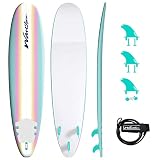
- Soft Foam Construction Classic Surfboard, strong EPS core with 3 stringer system
- Soft WBS-IXL ( Water Barrier Skin ) crosslink top deck and rails High Density (HDPE) Polyethylene slick bottom skin Exclusive New Color Graphic art deck
- Included removable bolt thru fins ankle leash traction pad
- Dimensions 8' x 22 1/2" x 3 1/4" Weight 11.5 lbs
- Volume 86 liters


- the wavestorm 7ft surfboard dimensions are 7' x 22" w x 3" thick - weight is 10.2lbs - volume at 70 liters
- triple stringer system gives the foam core rigidity , strength, and integrity.
- patented u.v. inhibiting soft graphic deck and high density slick bottom for rigidity.
- tail pad for better back foot traction and leash.
- three fin set included is a triple performance 4.5 fin set up for more maneuverability ."

- Soft foam construction Classic surfboard, strong EPS core with 3 Stringer System
- Soft webs-IXL water Barrier skin crosslink top deck and rails high density HDPE polyethylene Slick bottom skin exclusive graphic art deck

- Soft Foam Construction Classic Surfboard, strong EPS core with 3 stringer system
- Soft WBS-IXL ( Water Barrier Skin ) crosslink top deck and rails High Density (HDPE) Polyethylene slick bottom skin Exclusive New Tri-Color Solid Rasta Graphic art dec
- Included removable bolt thru fins ankle leash traction pad
- Dimensions 8' x 22 1/2" x 3 1/4" Weight 11.5 lbs


- Beginner-Friendly Design: Designed with beginners in mind, this 7ft foam surfboard offers a stable, forgiving platform that makes it easy to catch waves and build confidence in the water. Perfect for Learning and Progressing.
- Enhanced Stability and Safety: Soft top EPS foam core, heat laminated HDPE slick bottom IXPE deck construction provides excellent balance and stability, making it ideal for both adults and kids. The included ankle leash and soft-top design add extra safety for worry-free surfing.
- Durable and Long-Lasting: Built to withstand the bumps and knocks of learning, this premium surfboard’s strong construction with three wood stringers for strength ensures durability, responsiveness, and lasting performance through countless sessions.
- Versatile Performance: Suitable for all surf conditions, this high-performance board helps new surfers improve their skills and gives experienced riders a fun, reliable board for small to medium waves.
- Enhanced Performance and Grip: Suitable for all surf conditions, this high-performance board helps new surfers improve their skills and gives experienced riders a fun, reliable board for small to medium waves.

- The Wavestorm 8ft surfboard dimensions are 96 l x 22.5" w x 3.25" thick - weight is 11.5lbs - volume at 86 liters - recommended weight capacity at 200lbs.
- Triple stringer system gives the foam core rigidity, strength, and integrity.
- Soft WBS-IXL ( Water Barrier Skin ) crosslink top deck and rails High Density (HDPE) Polyethylene slick bottom skin Exclusive New Color Graphic art deck
- Included 3 removable bolt thru 4.5" performance fins, a double swivel ankle leash and tail pad for better back foot traction

- Beginner-Friendly Design: This 8 ft soft top surfboard for beginners is stable and easy to learn on with a buoyant soft top surfboard EPS foam core for confident wave-catching
- Enhanced Stability and Safety: The EPO bonding system and heat-laminated HDPE slick bottom with IXPE deck provide a stable platform, ideal for learner and those improving their balance. Double swivels and a triple rail saver ankle leash enhance safety, reducing injury risk in crowded lineups or learning environments
- Durable Construction and Resilient: Crafted for long-lasting performance, the Thurso Surf boards feature the stiff and durable EPS Core. Built to withstand the bumps and tumbles of learning, the sturdy foam material offers durability, strength, responsiveness and increased board speed, ensuring a longer lifespan
- Versatile Performance: Perfect for recreational surfing and competitions. This longboard surfboard allows you to practice and develop your skills across various wave conditions, boosting your confidence and abilities in the water. The forgiving surface of a soft top board encourages experimentation, making it a good option for surfers who want to practice their maneuvers
- Enhanced Performance and Grip: Three wood stringers provide superior strength, rigidity, and controlled flex. The textured tail pad and three fins enhance stability, while the adjustable fin box boosts performance and simplifies transport. The integrated traction pad ensures exceptional grip, keeping you secure during maneuvers and turns

- Soft Foam Construction Classic Surfboard, strong EPS core with 3 stringer system
- Soft WBS-IXL ( Water Barrier Skin ) crosslink top deck and rails High Density (HDPE) Polyethylene slick bottom skin Exclusive New Color Graphic art deck
- Included removable bolt thru fins ankle leash traction pad
- Dimensions 8' x 22 1/2" x 3 1/4" Weight 11.5 lbs
- Volume 86 liters

- The Wavestorm 8ft surfboard dimensions are 96 l x 22.5" w x 3.25" thick - weight is 11.4lbs - volume at 86 liters - recommended weight capacity at 200lbs.
- Triple stringer system gives the foam core rigidity, strength, and integrity.
- Patented u.v. inhibiting soft graphic deck and graphic high-density slick bottom for rigidity.
- Tail pad for better back foot traction and exclusive retro-coil leash.
- Multiple fin sets includes a triple performance 4.5 fin set up with customized fin screw tops.
Key Board Characteristics for Small Waves & Beginners
So, armed with the knowledge that small waves are your classroom, what kind of surfboard will be your trusty tutor? It boils down to a few fundamental principles: buoyancy, stability, and paddle power.
- Volume (Buoyancy): This is perhaps the most critical factor. Volume refers to the amount of space the board occupies, directly correlating to its floatation. More volume means more floatation, which translates to easier paddling and earlier wave catching. Think of it like trying to float on a skinny twig versus a sturdy log – the log is much easier!
- Length: Longer boards offer more stability and better glide. They also provide a larger surface area for paddling, making it easier to catch waves. While extremely long boards can be cumbersome to maneuver, a good length for beginners in small waves is generally between 7 and 9 feet.
- Width: A wider board provides a more stable platform when you’re standing up. This is crucial for beginners who are still finding their balance. It also contributes to overall volume.
- Thickness: Similar to width, a thicker board adds volume and stability. It prevents the board from sinking too easily under your weight.
- Rocker: This refers to the curve of the board from nose to tail. For small waves and beginners, a flatter rocker is generally preferred. A flatter board glides more easily over the water, generating speed in weak waves, and is more forgiving when paddling into waves. Excessive rocker can make it harder to catch waves and can cause the nose to pearl (dive under the water) more easily.
- Tail Shape: While not as critical as other factors for absolute beginners, a wider tail (like a squash or square tail) can provide more lift and drive in smaller, weaker waves.
- Fin Setup: For beginners, a thruster (three fins) or a quad (four fins) setup is generally recommended. These offer a good balance of stability and maneuverability. Avoid single fin setups until you’ve gained more experience.
Remember, the goal is to make it as easy as possible for you to get into waves, stand up, and ride. You’re not looking for performance turns just yet; you’re looking for fun and success.
For beginners looking to ride small waves, choosing the right surfboard is crucial for building confidence and improving skills. A great resource to explore is an article that discusses the best surfboards tailored for small wave conditions, which can help novice surfers make informed decisions. Additionally, if you’re interested in learning about other exciting products and deals, you might find this article on Amazon Prime Day insightful: Amazon Prime Day: What to Expect & Best Deals – Ultimate Guide.
Soft-Top Surfboards: The Ultimate Beginner’s Choice
If there’s one category of surfboard that screams “beginner-friendly” and “small waves,” it’s the soft-top. These boards have revolutionized learn-to-surf experiences and are the go-to for surf schools worldwide.
Why Soft-Tops Reign Supreme for Beginners
Soft-tops, often called “foamies” or “softboards,” earn their top spot for a multitude of reasons, making them ideal for your first foray into surfing and for crushing small waves.
- Unrivaled Safety: The primary advantage of a soft-top is its construction. The deck is covered in a soft, grippy foam material, and the fins are often made of soft, flexible rubber. This significantly reduces the risk of injury to yourself and others in the lineup, a major plus when you’re still figuring out where your board ends and your body begins.
- Exceptional Durability: Soft-tops are incredibly robust. They can take a beating from dings, scrapes, and even being dropped without major damage. This makes them perfect for the inevitable knocks and bumps that come with learning.
- Maximum Buoyancy: Soft-tops are inherently volumous. They are designed to float well, making paddling and catching waves incredibly easy, even for those with less upper body strength.
- Stability Galore: Their width, thickness, and overall volume provide a very stable platform, making it much easier to stand up and maintain balance as you ride.
- Affordability: Generally, soft-tops are more budget-friendly than traditional fiberglass boards, making them an accessible entry point into the sport.
- Good for Small, Mushy Waves: Their inherent float and flatter rocker designs excel at generating speed in less powerful, smaller waves, which are precisely the conditions you’ll likely encounter as a beginner.
Types of Soft-Tops to Consider
While most soft-tops share common characteristics, you’ll find variations in size and shape.
- Long Soft-Tops (7-9 feet): These are the classic learner boards. They offer the most stability and paddle power, making them incredibly easy to catch waves on. Ideal for absolute beginners and those exclusively focusing on small, rolling waves.
- Mid-Length Soft-Tops (6-7 feet): As you progress slightly, or if you’re a smaller adult or a growing child, a slightly shorter soft-top can offer a touch more maneuverability while still retaining excellent stability and float.
- Hybrid Soft-Tops: Some brands are now producing soft-tops with more performance-oriented shapes and fin setups, bridging the gap between a pure soft-top and a hardboard. While still foamies, they might have slightly less volume than a true beginner soft-top. Stick to the higher volume options for your initial stages.
Pro Tip: Don’t underestimate the soft-top! While they are beginner boards, many experienced surfers keep a soft-top in their quiver for super small, fun days or for just messing around with friends. They are genuinely fun to ride.
Mini-Malibus (Mals) / Funboards: Your Next Step

Once you’ve mastered the basics on a soft-top, or if you’re a slightly more athletic beginner ready to jump straight into a hardboard, the mini-malibu or funboard is an excellent choice. These boards bridge the gap between longboards and shortboards.
What Makes a Mini-Mal Special
Mini-mals, affectionately shortened to “mals,” are essentially scaled-down longboards. They retain many of the longboard’s beginner-friendly characteristics but offer a touch more maneuverability.
- Excellent Paddle Power: Like longboards, mini-mals have significant volume and length, making them easy to paddle and catch waves early. This is crucial for small waves where power is limited.
- Stable Platform: Their generous width and thickness provide a stable standing platform, helping you maintain balance as you hone your pop-up and stance.
- Forgiving Ride: They are more forgiving than shortboards, allowing you to make mistakes without immediately falling off. You’ll have more time to react and adjust.
- Good Glide in Small Waves: Their flat-ish rocker profile and volume allow them to glide effortlessly across the face of small, mushy waves, helping you generate and maintain speed.
- More Maneuverable Than a Longboard: While still not a performance shortboard, a mini-mal is easier to turn and control than a full-sized longboard, especially when you start trying to ride down the line.
- Progression Friendly: A good mini-mal can last you a long time. You can learn to surf, ride down the line, and even attempt some basic turns on this type of board before needing to consider something more advanced.
Ideal Dimensions for Beginner Mals
When choosing a mini-mal, look for these general dimensions:
- Length: Typically, mini-mals range from 7 to 8 feet. For beginners, err on the longer side (7’6″ to 8’0″) for maximum stability and wave count.
- Width: Aim for a board that is around 21 to 22 inches wide. This provides crucial stability.
- Thickness: Look for thickness in the range of 2.75 to 3 inches. This adds to the overall volume and float.
- Volume: A good beginner mini-mal will have a volume between 50 and 65 liters, depending on your weight. Heavier surfers will need more volume.
Fin Setup: Most mini-mals come with a thruster (three-fin) setup, which is ideal for a balance of drive and maneuverability for beginners.
The Versatility of Longboards: The Classic Choice

Before the advent of dedicated mini-mals and soft-tops, the longboard was the go-to beginner board. And for good reason! They are exceptionally stable, paddle like a dream, and are the epitome of small-wave surfing.
Why Longboards Excel in Small Waves
Longboards have a timeless appeal and for beginners, they offer an unparalleled pathway to standing up and riding the face.
- Maximum Paddle Power: With lengths often stretching from 9 to 10 feet (or even longer), longboards boast massive volume. This means you can paddle into waves with minimal effort, catching them much earlier than on shorter boards. This early entry is a huge advantage in weak, small waves.
- Unbeatable Stability: The sheer size of a longboard provides an incredibly stable platform. This makes popping up much easier and gives you more time to find your balance once you’re on your feet.
- Incredible Glide: Longboards are designed for glide and trim. Their flat rocker and long parallel rails allow them to carry speed effortlessly across the weakest of waves, letting you enjoy a long, cruisy ride.
- Forgiveness: Because of their stability and volume, longboards are very forgiving of minor errors in technique. You have more time to correct your stance or adjust your balance before you’re in the water.
- Classic Surfing Experience: Learning on a longboard gives you a taste of surfing’s origins. It teaches you to appreciate the flow, trim, and rhythm of the ocean, foundational skills that transfer to any type of board.
- Great for Catching Anything: From knee-high ripples to overhead grinders (for the experienced), longboards are incredibly versatile and can catch almost any wave that comes your way. For beginners, this means no matter how small the waves are, you’ll still be getting plenty of rides.
Choosing Your First Longboard
When looking for a longboard as a beginner, keep these points in mind:
- Length: Aim for a board between 9 to 10 feet. If you are very light, an 8’6″ could work, but generally, longer is better for beginners.
- Width & Thickness: Ensure the board is amply wide (22-24 inches) and thick (3 inches or more) to maximize stability and volume.
- Volume: A beginner longboard should have a volume of 70 liters or more, again, adjusting upwards for heavier surfers.
- Material: While traditional fiberglass longboards are beautiful, consider a robust epoxy construction (often referred to as “Epoxy Longboards”) for added durability. Soft-top longboards also exist and offer the best of both worlds (soft-top safety with longboard performance).
- Fin Setup: Many longboards come with a single fin setup, which is great for traditional longboarding. However, for a beginner, a 2+1 setup (a large center fin with two small side fins) offers more stability and control.
If you’re just starting out in surfing and looking for the best surfboard for small waves, it’s essential to choose a board that offers stability and ease of paddling. A great resource to consider is an article that discusses various options tailored for beginners, which can help you make an informed decision. You can find valuable insights in this related article that highlights the importance of selecting the right equipment for your surfing journey.
Beyond the Basics: Hybrid Shapes & Fish Boards (Intermediate Beginner)
| Surfboard Model | Length | Width | Thickness | Volume | Fin Setup |
|---|---|---|---|---|---|
| Soft-Top Foamboard | 7’0″ | 21″ | 3″ | 55L | 3-fin setup |
| Mini Malibu | 7’6″ | 21.5″ | 2.75″ | 56L | 2+1 fin setup |
| Fish Shape | 6’8″ | 20.5″ | 2.5″ | 42L | Twin fin setup |
Once you’ve spent some time on a soft-top or longboard and are comfortable standing up and riding small waves consistently, you might start looking for something with a bit more zest. This is where hybrid shapes and fish boards come into play. While not for absolute beginners, they are excellent “next step” boards for small waves.
Hybrid Boards: The Best of Multiple Worlds
Hybrid boards, as the name suggests, blend characteristics from different board types. For small waves and improving beginners, they often combine the paddle power of a longboard or mini-mal with the maneuverability of a shorter board.
- Volume Where It Counts: Hybrids typically feature ample volume under the chest area, making paddling and wave catching easier, especially in weaker waves.
- Wider Outline: Many hybrids have a wider outline, particularly through the nose and tail, contributing to stability and lift in small surf.
- Shorter Lengths: Compared to mini-mals, hybrids can be quite a bit shorter (6’0″ to 7’0″), making them easier to turn and transport.
- Versatility: A good hybrid can handle a wider range of conditions than a pure shortboard, making it a valuable addition to your quiver as you progress. They excel in small, mushy waves but can also hold their own when the waves pick up a little.
- Smooth Transition Board: If your ultimate goal is to ride shortboards, a hybrid is an excellent stepping stone, helping you get used to shorter lengths without sacrificing too much performance in small waves.
Fish Boards: Fun & Fast in Small Waves
The fish surfboard is celebrated for its ability to fly across small, weak waves. Characterized by a wide outline, usually a swallow tail, and often a relatively flat rocker, fish boards are a blast once you’ve got your pop-up down.
- Great for Generating Speed: The wide nose, flat rocker, and wide tail of a fish make it incredibly efficient at picking up speed and maintaining it, even in gutless conditions.
- Loose & Playful: The swallow tail allows the board to turn more freely and feel “looser” on the wave, encouraging more dynamic surfing.
- Early Wave Entry: Despite their shorter lengths (often 5 to 6 feet), fish boards typically have generous volume, allowing for surprisingly easy wave catching.
- Good for Groveling: “Groveling” refers to surfing very small, weak waves. Fish boards are specially designed for this, making even tiny waves feel fun and rippable.
- Fin Setup: Most fish boards are ridden as a twin fin or a quad fin. Both setups offer speed and a loose feel, though quads can provide a bit more drive and hold.
Important Note: While hybrids and fish boards are fantastic for small waves, they are best suited for beginners who are already able to consistently paddle into waves and stand up on a larger, more stable board (like a soft-top or mini-mal). Jumping straight to a fish might feel frustratingly unstable.
For beginners looking to ride small waves, choosing the right surfboard can make all the difference in their experience. A great resource to explore is an article that discusses the best surfboards tailored for novice surfers. You can find valuable insights and recommendations in this informative piece, which can help you make an informed decision. Check out the article on the best surfboard for small waves beginners here to enhance your surfing journey.
Essential Gear and General Tips for Surfing Small Waves
Having the right board is paramount, but a few other pieces of gear and some sage advice will elevate your small-wave experience and accelerate your learning curve.
Beyond the Board: Must-Have Accessories
Don’t forget these crucial items to make your surf sessions safe and enjoyable.
- Leash: Non-negotiable! Your leash keeps your board attached to you after a wipeout, saving you from long swims and preventing your board from drifting away or hitting other surfers. Ensure it’s the correct length for your board (typically the same length or slightly shorter than your board).
- Wetsuit (if needed): Depending on your water temperature, a wetsuit is essential for comfort and warmth. Look for thicknesses appropriate to your local conditions.
- Wax: You’ll need surf wax for traction on the deck of your board. Different waxes are formulated for different water temperatures.
- Board Bag (Optional but Recommended): Protects your board from dings and UV rays, especially during transport and storage.
- Rash Guard (Optional): Provides sun protection and prevents chafing, especially when you’re not wearing a full wetsuit.
- Sunscreen and Hat: Protect your skin from the sun’s harmful rays.
Maximizing Your Small Wave Sessions
Remember these key tips to make the most of your time in the water when the waves are small.
- Paddle Power is King: In small waves, you can’t rely on the wave’s power to do all the work. You need to paddle strongly and efficiently to match the wave’s speed and generate enough momentum to catch it. Focus on long, deep strokes.
- Positioning is Crucial: Learning to read the waves and position yourself in the “sweet spot” is even more important in small waves. You want to be where the wave is first breaking, but not too far out where it’s still just a ripple.
- Look for the Peak: Identify where the wave is peaking (starting to break) and aim to paddle into that section.
- Be Patient: Sometimes small waves require a bit more patience. Don’t rush into a wave that hasn’t fully formed. Wait for the right one.
- Practice Your Pop-Up: A quick and smooth pop-up is vital. Practice it on the beach or at home on your board. The faster you get to your feet, the sooner you’ll be riding.
- Maintain Your Momentum: Once you’re on the wave, try to stay in the “power zone” (the white water or the gentlest slope of the unbroken wave face) to maintain speed and extend your ride.
- Don’t Be Afraid to Ride Whitewater: For absolute beginners, catching and riding the whitewater all the way to the beach is a fantastic way to build confidence and practice standing.
- Embrace the Fun: Most importantly, enjoy yourself! Small waves are perfect for kicking back, cruising, and soaking in the ocean. Don’t get caught up in trying to “shred” just yet.
Choosing the right beginner surfboard for small waves is arguably the most important decision you’ll make when starting your surfing journey. By prioritizing volume, stability, and paddle power, you’re setting yourself up for success, countless waves caught, and an abundance of fun. Whether you opt for the forgiving nature of a soft-top, the timeless glide of a mini-mal, or the classic cruise of a longboard, remember: the best board is the one that gets you into the most waves and puts the biggest smile on your face. Now go forth, paddle out, and enjoy the ride!