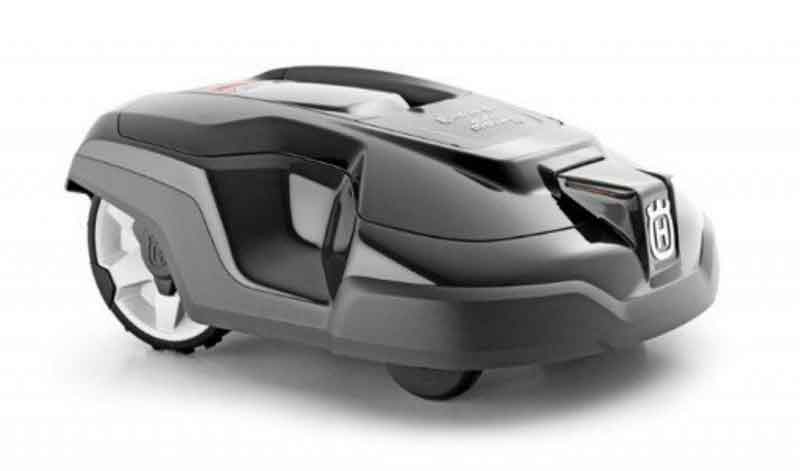
You’re tired of the endless chore of mowing your lawn. You’ve considered a robot lawn mower, but the thought of another Wi-Fi-dependent device in your life – another app to manage, another potential security vulnerability – just doesn’t appeal. You value simplicity, reliability, and perhaps a bit of old-school charm in your gadgets. You want a robot that works, plain and simple, without needing to chat with your router.
You’re in luck. While the market is increasingly saturated with smart, connected devices, a strong contingent of non-Wi-Fi robot lawn mowers still exists, offering superb performance without the digital bells and whistles. These machines operate independently, either following a perimeter wire, using advanced sensors, or a combination of both. They are perfect for you if you prioritize ease of use, robust operation, and a clear distinction between your lawn care and your internet connection.
Why Go Wi-Fi-Free? Your Reasons Are Valid
Before diving into the top models, let’s address why opting out of Wi-Fi for your lawn mower might be the smartest decision you make. You’re not being a Luddite; you’re being practical.
Simplicity and Ease of Use
You don’t want another app clogging up your phone. You want to set it and forget it. Non-Wi-Fi models typically feature straightforward control panels on the mower itself, making programming surprisingly intuitive. You press a few buttons, and off it goes. No network pairing, no forgotten passwords, no firmware updates to worry about. This direct approach offers a significant reduction in potential frustration. You appreciate a machine that does one job, and does it well, without requiring a degree in smart home technology.
Reliability and Reduced Points of Failure
Your home Wi-Fi can be finicky. Dropouts, dead zones, router reboots – these are all potential headaches that can cripple a Wi-Fi-dependent mower. A non-Wi-Fi model, on the other hand, is immune to such issues. Its operation is self-contained. It relies on its internal programming and sensors, not an external network. This translates to more consistent performance and fewer interruptions in your lawn care routine. You understand that fewer moving parts (or in this case, fewer digital connections) often mean greater reliability.
Enhanced Security and Privacy
Every Wi-Fi-connected device is a potential entry point for cybersecurity threats. While a lawn mower might seem an unlikely target, you’re aware that smart devices can be exploited. By choosing a non-Wi-Fi model, you eliminate this concern entirely. Your mower doesn’t transmit data, doesn’t connect to the cloud, and doesn’t offer a back door into your home network. You value your privacy and prefer to minimize your digital footprint wherever possible.
Lower Initial Cost
Often, but not always, non-Wi-Fi robot lawn mowers come with a slightly lower price tag. You’re not paying for the additional connectivity hardware and software development. If budget is a significant factor for you, this can be an attractive advantage. You appreciate getting excellent value for your money without sacrificing core functionality.
These are the bread and butter of the non-Wi-Fi robot mower world. You install a boundary wire around your lawn, and the mower diligently stays within those confines. This established technology is incredibly reliable and offers precise control over the mowing area.

- NetRTK + AI Vision + GNSS/INS Fusion Navigation: Built for a wire-free experience, this robotic lawn mower combines NetRTK, AI vision, and GNSS/INS fusion for centimeter-level positioning and intelligent path planning. Enjoy NetRTK with no subscription required. The fusion navigation system helps the mower navigate reliably near trees, buildings, and other challenging signal environments for accurate, continuous mowing right out of the box.
- 0.9-Acre Coverage & 57% Slope Capability: Designed as a robot mower for 0.9-acre lawns, this robot lawnmower covers up to 0.9 acres and handles maximum slopes of up to 57% (30°). With stable performance on gradients up to 40% (22°), the robotic lawnmower maintains reliable traction across uneven ground, hills, and challenging terrain, allowing the robot mower to handle demanding outdoor landscapes with confidence.
- Wi-Fi HaLow Long-Range Connectivity: This robotic lawn mower includes a dedicated auto-pairing HaLow router for plug-and-play setup. Compared with standard Wi-Fi, HaLow delivers longer range, stronger signal penetration, and coverage up to 80,000 sq. m. (about 20 acres) in ideal open areas. It maintains a stable connection for mapping, monitoring, and remote control across large yards and weak-signal areas. Coverage varies by obstacles, terrain, and interference.
- Smart Lawn-Management App: Control your robotic lawnmower from your phone with the LOPKIN App. Schedule mowing sessions, select cutting modes, monitor real-time progress, and manage every zone covered by your robot lawnmower. With automatic mapping, manual drag-to-map, and app-guided mapping, the robot mower makes it easy to create customized zones and mowing plans for different areas of your yard.
- AI Vision Obstacle Avoidance: This intelligent automatic lawn mower uses advanced AI vision to identify and avoid more than 300 common objects, including pets, children, toys, and garden furniture, without relying on physical collision detection. By continuously analyzing its surroundings, the lawn mower robot helps reduce collision risks, allowing the robotic lawn mower to deliver a safer and more automated mowing experience.

- No Boundary Wire, Ready in Just 5 Minutes - Skip the hassle of digging and installing perimeter wires. GOAT O1000 RTK automatically maps your lawn with LiDAR-Enhanced RTK navigation, allowing quick setup in about 5 minutes and delivering accurate mowing for lawns up to 1/4 acre (10,890 sq.ft.)
- Precise RTK Navigation for Complete Lawn Coverage - Powered by RTK + Vision + 3D ToF technology, GOAT O1000 RTK maintains centimeter-level positioning to mow efficiently with fewer missed areas. Intelligent route planning delivers neat mowing patterns while maintaining reliable performance around trees and complex landscapes.
- Smart Obstacle Avoidance Protects Your Yard - Featuring AIVI 3D Obstacle Avoidance, GOAT intelligently detects lawn furniture, toys, trees, pets and other common yard obstacles. It safely navigates narrow passages as small as 2.3 ft and climbs slopes up to 45% (24°) for uninterrupted mowing.
- Fully Customizable Lawn Care from the ECOVACS App - Control every aspect of mowing directly from your smartphone. Create multiple mowing zones, set no-go areas, adjust cutting height and schedules, monitor mowing progress in real time, and enjoy hands-free lawn maintenance all season long.
- Take Back Your Weekends with Fully Automated Mowing - No more pushing heavy mowers or spending hours maintaining your lawn. GOAT O1000 RTK automatically follows customized mowing schedules, keeping your grass consistently healthy and neatly trimmed while you relax or spend time with family.


- PRECISION CUTTING.: The robo lawn mower ensures an even trim every time; take advantage of a remote lawn mower robot that navigates effortlessly around obstacles and maintains stable performance even on moderate slopes (up to 25–30% incline depending on conditions).
- ACTIVATION CODE: Anti-Theft Protection, for security and proper setup, each mower requires a one-time activation code (provided after purchase) before first use.
- GPS MAPPING: Advanced navigation system creates efficient mowing patterns and ensures complete lawn coverage with smart route planning, even on complex terrains with varying elevations.
- SELF-CHARGING: Automatically returns to charging station when battery is low and resumes work after charging is complete. With 4 hours runs BESTMOW works on set plan in wet and dry weather.
- QUIET OPERATION: Ultra-quiet motor design allows for day or night mowing without disturbing neighbors or household members.

- Centimeter-Level RTK Cloud Accuracy: Commercial-grade RTK Cloud technology delivers centimeter-level positioning for this robotic lawn mower with no local antenna installation and no additional cloud costs.
- Auto Mapping for More Complete Coverage: Vision AI helps the robot lawn mower understand lawn shapes and boundary types, then automatically maps your yard for smooth paths, closer edge-following, and fuller coverage from day one.
- AI Obstacle Avoidance with Neural Processing: Vision AI recognizes and understands common yard objects, using a trained neural network and up to 10 trillion operations per second to help mowing stay smooth, safe, and uninterrupted.
- Infinite Zone Mowing & App Remote Control: Create unlimited mowing zones, set custom paths, define no-go areas, edit your map, and monitor your remote control lawn mower from the app anytime.
- Reliable Navigation Even in Shade: RTK Cloud provides centimeter-level accuracy in open areas, while V-SLAM sensor fusion with Vision AI helps maintain precise navigation in shaded or partially covered lawn spaces.

- RTK+Vision, Fit into Every Garden: Lawn covered by trees? Narrow corridor? However complicated your garden layout is, enhanced EFLS 2.0 got you covered. Customized RTK technology with Vision enhancement provides stable centimetre-level positioning to handle an incredibly diverse range of lawn layouts. Even when it’s under the trees or in a narrow corridor, Navimow still works perfectly with accurate navigation.
- No Perimeter Wires & Automatic AI-assisted Mapping: Quick, wire-free setup in just a few taps, simply use your smartphone to guide Navimow and map out virtual boundaries around your lawn. Furthermore, with the revolutionary AI-powered Assist Mapping feature, Navimow identifies the clear edges of your lawn during mapping and automatically navigates and maps the entire working area, making setup easier than ever.
- Efficient Flawless Lawn Maintenance: Navimow mows your lawn with planned mowing patterns to ensure systematic and efficient grass cutting, changes mowing direction after 100% coverage to minimize tracks on the lawn, intelligently recharges, and keeps mowing until the job is done, so your lawn always looks fresh.
- Identifies 150+ Types of Obstacles: Compared to ultrasonic sensors or bumper, Navimow’s 140° field-of-view camera with built-in Al algorithms can detect 150+ types of common objects in the garden to ensure stronger obstacle avoidance capabilities and a higher level of safety.
- Smart App Control & Multi-Zone Management: With the Navimow App, you can edit the mowing map, set different schedules and mowing directions for up to 12 zones, remotely control your lawn mower, keep track of the mowing progress, and locate your mower in case of theft (optional with Access+). You can also easily download over-the-air (OTA) updates to access the latest features and improvements.

- 𝟱-𝗠𝗶𝗻𝘂𝘁𝗲 𝗦𝗲𝘁𝘂𝗽, 𝗭𝗲𝗿𝗼 𝗠𝗮𝗽𝗽𝗶𝗻𝗴 𝗪𝗮𝗶𝘁:Skip messy wires and RTK stations—just unpack, power on, and let eufy E15 Gen 2 mow and map at the same time
- 𝗡𝗼 𝗪𝗶𝗿𝗲𝘀, 𝗡𝗼 𝗥𝗧𝗞, 𝗡𝗼 𝗦𝗶𝗴𝗻𝗮𝗹 𝗜𝘀𝘀𝘂𝗲𝘀:eufy TrueVision technology uses pure-vision cameras and algorithms to map your lawn and navigate edges, obstacles, and pathways, even in shade and on slopes
- 𝗛𝗮𝗻𝗱𝘀-𝗙𝗿𝗲𝗲 𝗔𝘂𝘁𝗼 𝗠𝗮𝗽𝗽𝗶𝗻𝗴, 𝗦𝗺𝗮𝗿𝘁𝗲𝗿 𝘄𝗶𝘁𝗵 𝗘𝘃𝗲𝗿𝘆 𝗠𝗼𝘄:Upgraded V-FSD maps 25% more completely and keeps learning to effortlessly cover front and back yards—even disconnected zones up to 60 m apart
- 𝗣𝗿𝗲𝗰𝗶𝘀𝗲 𝗔𝗜 𝗔𝘃𝗼𝗶𝗱𝗮𝗻𝗰𝗲 𝗳𝗼𝗿 𝟱𝟬𝟬+ 𝗢𝗯𝘀𝘁𝗮𝗰𝗹𝗲 𝗧𝘆𝗽𝗲𝘀:Dual cameras and AI semantic segmentation identify and avoid 500+ obstacles—including trees, furniture, pools, toys, pets, and kids—for smooth, worry-free mowing
- 𝗥𝗶𝗱𝗲-𝗼𝗻-𝗘𝗱𝗴𝗲 𝗖𝘂𝘁𝘁𝗶𝗻𝗴:Advanced Ride-on-Edge technology with built-in sensors precisely detects boundaries, avoiding drops, obstacles, and walls for smooth operation. Easily customize the edge mowing distance in the app for perfect coverage

- WIRE-FREE SETUP & 0.37 ACRE MAX COVERAGE. Eliminate the exhausting chore of burying perimeter wires. Designed to effortlessly manage up to 0.37 Acre of lawn, this advanced robot lawn mower offers flexible dual mapping options. Choose AI Auto-Mapping powered by Sentisphere technology to effortlessly chart open lawns, or use App-Controlled Manual Mapping to steer the mower like a remote control for custom, hyper-precise boundary tracing around complex garden features.
- FULL-BAND RTK + QUAD-VISION NAVIGATION. Say goodbye to lost signals and erratic wandering. Powered by a premium Full-Band RTK and an industry-leading Quad-Camera AI Vision dual-navigation system, this robot mower maintains pinpoint positioning even under dense tree canopies, near high fences, or in shaded tight corners. It smoothly glides through narrow passages and complex yard layouts, providing stable, continuous coverage.
- PRO-GRADE 4WD & REVOLUTIONARY ACTIVE STEERING. Conquer uneven and challenging terrains with a heavy-duty 4WD drive system that masterfully handles incredible 80% (38.7°) slopes and massive 3.15-inch obstacles. Equipped with an advanced Active Steering System , it turns with unmatched agility without tearing or harming your turf. Paired with a Dynamic Suspension System, it maintains a perfectly stable posture on rugged ground for a flawlessly uniform cut.
- EXPANSIVE 9.49" CUTTING & MULTI-SENSOR OBSTACLE AVOIDANCE. Slash your mowing time with an upgraded, wider 9.49-inch (24 cm) cutting width and a flexible cutting height ranging from 1.57 to 3.54 inches. Driven by a powerful Multi-Sensor Fusion Obstacle Avoidance system utilizing 4 advanced sensors, it intelligently bypasses static garden objects, safely steers clear of humans or pets, and delivers a completely safe, unsupervised, and highly efficient mowing experience.
- SMART APP, INCLUDED 4G & ANTI-THEFT PROTECTION. Take full command with the Roborock App to customize multi-zone schedules, view a real-time progress dashboard, and activate Wildlife-Friendly mode. Combined with a PIN code lockout, a high-decibel alarm, and real-time GPS tracking, you can enjoy ultimate, long-range peace of mind.

- From Steep Hills to Rough Terrain, It Just Keeps Going. Uneven ground? No problem. This mower robot is built with an All-Wheel Drive system and automotive-grade stability control, giving you the confidence to tackle slopes up to 45%. If you're searching for a gps lawn mower robot that won't slip or stall on challenging grades, this robotic mower is your answer.
- Precision Steering That Protects Every Blade of Grass. Nobody wants a torn-up yard. Thanks to the zero-turn steering design, this lawn robot mower pivots smoothly without scraping or damaging the turf. The adjustable 2–3.6" cutting height paired with a 7.1" deck ensures a manicured look that makes your property the envy of the neighborhood.
- Power When You Need It, Savings When You Don't. This automatic lawn mower robot intelligently adapts—delivering extra torque for thick grass or inclines, then conserving energy on easier passes. With a 2.5Ah battery, this ai lawn mower robot efficiently covers up to 1,350 sq ft per charge, making it the ideal remote lawn mower robot for smaller to medium-sized lots.
- No Wires, No Headaches—Just Instant Mapping. Cut the cord for good. As a true robot lawn mower no wire system, it uses advanced EFLS Network RTK and Vision for one-tap auto mapping. You get centimeter-level GPS accuracy right out of the box, making this one of the most sophisticated robotic lawn mowers wire free available today.
- Your Yard, Zoned and Managed from Anywhere. Take command of up to 20 distinct mowing zones with optimized routes and seamless auto-resume charging. Plus, with real-time GPS alerts, this lawn robot lets you know instantly if it's been lifted or wandered off-course. It's the smart, secure way to automate your grass cutting.

- WIRE-FREE LiDAR NAVIGATION – No perimeter wires, RTK antenna, or complicated installation required. Equipped with ECOVACS HoloScope 360° Dual-LiDAR Navigation, GOAT O1000 LiDAR PRO automatically maps your lawn and delivers precise positioning even under trees, near fences, and in GPS-challenging environments.
- BUILT-IN TRUEDGE BORDER TRIMMING – Designed to mow and trim closer to lawn edges, driveways, sidewalks, flower beds, and landscaping borders. The integrated edge-trimming system helps reduce manual touch-ups and keeps your yard looking neat with less effort.
- AI VISION & 3D LiDAR OBSTACLE AVOIDANCE – Combines AI-powered vision technology with 3D ToF LiDAR to detect and navigate around over 200 common outdoor obstacles, including toys, furniture, pets, and garden décor, helping provide safer and more efficient mowing.
- IDEAL FOR COMPLEX AND NARROW LAWNS – Featuring a compact, slim-body design, GOAT O1000 LiDAR PRO can travel through passages as narrow as 0.8 m (31.5 in.), making it well-suited for side yards, narrow pathways, and multi-zone lawn layouts.
- SMART APP CONTROL & CUSTOMIZED MOWING – Easily create mowing zones, set schedules, adjust cutting preferences, and establish no-go areas through the ECOVACS app. Flexible controls help adapt mowing performance to your lawn's unique layout and seasonal needs.
Husqvarna Automower Series (Certain Models)
Husqvarna has long been a leader in the robot mower market, and many of their entry-to-mid-level models operate perfectly without Wi-Fi. You’ll find their build quality exceptional and their performance consistently top-tier.
Husqvarna Automower 115H (without Connect Module)
You’ll appreciate the 115H for its simplicity and effectiveness. Designed for lawns up to 0.4 acres (roughly 1/2 football field), it quietly and efficiently maintains your grass. You use the intuitive control panel to set the schedule, cutting height, and other parameters. Its three razor-sharp pivoting blades deliver a finely mulched cut, returning nutrients to your lawn. You’ll be impressed by its ability to handle slopes up to 17 degrees.
Husqvarna Automower 310 (without Connect Module)
If your lawn is a bit larger, say up to 0.25 acres, the Automower 310 is a step up. You’ll find it handles more complex lawns with ease, navigating narrow passages and obstacles effortlessly. Installation of the perimeter wire is straightforward, and once set up, it requires minimal intervention from you. The 310’s weather timer adjusts its mowing frequency based on grass growth, ensuring your lawn is always perfectly manicured without you having to lift a finger.
Gardena Sileno City/Life Non-Smart Models
Gardena, a subsidiary of Husqvarna, offers a range of excellent non-Wi-Fi robot mowers designed for smaller to medium-sized urban gardens. You’ll find these models particularly user-friendly and very quiet in operation.
Gardena Sileno City 250/500
For smaller city gardens (up to 2,700 sq ft or 5,400 sq ft respectively), the Sileno City models are ideal. You’ll love how compact and quiet these mowers are. They’re designed to navigate tight spaces and awkward corners, leaving you with a perfectly cut lawn. The control panel is extremely easy to use, letting you set your schedule and forget about it. You can even hose it down for cleaning, a feature you’ll find incredibly convenient. The “SensorCut” system ensures a clean, even cut every time.
Gardena Sileno Life 750/1000
If your lawn is larger, up to 8,100 sq ft or 10,800 sq ft, the Sileno Life range offers the same quiet operation and easy programming but with increased capacity. You’ll appreciate its ability to handle slopes up to 35% and its all-weather capability. These models are designed to work in rain or shine, keeping your lawn in top condition regardless of the weather. You’ll find the installation process similar to the Husqvarna models, requiring a perimeter wire but offering robust, reliable performance once set up.
McCulloch ROB Series (Certain Models)
McCulloch, another brand under the Husqvarna umbrella, offers robust and efficient robot mowers that prioritize straightforward operation. You’ll often find them to be a more budget-friendly option without sacrificing core performance.
McCulloch ROB R600/R1000
You’ll find the ROB R600 suitable for lawns up to 600m² and the R1000 for up to 1000m². These mowers are known for their rugged design and dependable performance. Installation is simple, relying on the classic perimeter wire setup. Their bright orange color makes them easy to spot on your lawn. You’ll appreciate the clear, intuitive control panel where you can set schedules and cutting heights. They also feature a lift sensor and tilt sensor for safety, automatically stopping the blades if the mower is picked up or tips over.
If you’re in the market for a robot lawn mower that doesn’t rely on WiFi, you might find it helpful to explore various options that offer reliable performance without the need for internet connectivity. For more insights on innovative outdoor equipment, check out this related article on climbing helmets, which discusses the latest bestsellers and can provide you with a broader perspective on high-quality gear: Top 10 Best Climbing Helmets 2016 – Latest Bestsellers.
The Trailblazers: Vision-Based / Boundary-Free Non-Wi-Fi Models
While most non-Wi-Fi models rely on a perimeter wire, a new breed is emerging that uses advanced sensors – often cameras – to navigate your garden without the need for any wires. This is perfect for you if you dread the thought of burying wire or if your garden layout changes frequently.
Luba Robo Mower (Certain Models with RTK but without App Control)**
Okay, this one is a bit of a nuanced inclusion. The Luba line is primarily known for its advanced RTK-GPS navigation, which often does involve app control and Wi-Fi for initial setup and mapping. However, some models or operational modes might allow it to run on a pre-programmed schedule set physically on the device after initial non-Wi-Fi setup, using its RTK-GPS for boundary-free operation without active Wi-Fi connection during mowing. You would need to confirm specific model features for this functionality. The key here is its ability to operate without a physical boundary wire, relying on precise satellite positioning.
Understanding RTK-GPS for You
For you, RTK (Real-Time Kinematic) GPS means incredible precision. Instead of a perimeter wire, Luba uses satellite signals, corrected by a fixed base station in your yard, to know exactly where it is. This allows it to mow in parallel lines, much like a human would, resulting in a beautifully striped lawn. You don’t need to lay a wire, which is a huge advantage for complex or extremely large properties. If you can find a configuration that allows for physical-only scheduling, this offers the ultimate in wire-free convenience without continuous wireless interaction.
Segway Navimow Series (Certain Basic Models without App for Operation)
Similar to Luba, the Navimow employs advanced satellite navigation (Exact Fusion Locating System – EFLS) to operate boundary-free. While many models are heavily integrated with a smartphone app for full control, some base models might offer initial setup and scheduling via a physical interface, allowing them to perform their mowing tasks wire-free and Wi-Fi-free once programmed. This is a rapidly evolving category, so confirming specific model capabilities is crucial.
Advantages of EFLS for Your Property
EFLS combines GPS data with other sensors (IMU, vision sensors, odometer) to achieve centimeter-level accuracy. You’ll appreciate that this means your Segway Navimow can navigate your lawn with incredible precision, avoiding obstacles and maintaining perfectly straight lines. No wires to bury, no wires to repair. This is especially beneficial if your lawn has intricate landscaping or if you foresee making changes to its layout down the line. You’re looking for freedom from wires, and these models deliver it.
The Classics: Obstacle Avoidance Non-Wi-Fi Models

These robot mowers rely on bumps sensors and sometimes ultrasonic sensors to detect obstacles and navigate your lawn. They are tried-and-true, often more affordable, and incredibly robust.
Worx Landroid Series (Certain Base Models)
Worx Landroid mowers have gained popularity for their affordability and user-friendly design. While many now feature Wi-Fi and app control, you can still find older or specific base models that operate purely on a perimeter wire and an onboard control panel.
Worx Landroid S300/M500 (Base Models)
You’ll find these models are excellent value. They use a perimeter wire for boundary definition and then navigate randomly within that space. The control panel is straightforward, letting you set schedules and cutting heights with ease. They are equipped with bump sensors to detect obstacles and will gently change direction. You’ll appreciate the “cut to edge” function that allows them to get as close to the border as possible. Some models might even feature rain sensors, telling the mower to return to its base station during a downpour, only resuming once the grass is dry.
AL-KO Robolinho Series
AL-KO offers a range of robot mowers known for their durable construction and quiet operation. Many of their models function perfectly without any need for Wi-Fi.
AL-KO Robolinho 300 E / 500 E
Designed for smaller to medium-sized lawns (up to 300m² or 500m²), these Robolinho models are a strong contender for your non-Wi-Fi needs. You’ll find them incredibly easy to install, with a clearly laid-out control panel for scheduling. They operate quietly, making them ideal for residential areas. They use a perimeter wire and advanced sensors to navigate, and their robust construction means they can handle uneven terrain and light obstacles. The “mulching system” ensures that the finely cut grass clippings are returned to the lawn as a natural fertilizer.
Installation and Setup: What You Need to Know

You’ve chosen a non-Wi-Fi robot mower, now what? Installation is generally straightforward, but it requires a bit of preparation on your part.
Laying the Perimeter Wire (for most models)
For the vast majority of non-Wi-Fi models, you’ll need to install a perimeter wire. You can do this in one of two ways:
Pegging the Wire A-Surface and Forcing It Into the Grass Over Time
This is the easiest method. You use special plastic pegs (usually included) to secure the wire to the surface of your lawn. Over a few weeks, the grass will grow over the wire, making it virtually invisible. You’ll appreciate this method for its speed and minimal effort, though you should be careful not to cut the wire with other gardening tools during its initial settling period.
Burying the Wire
For a more permanent and completely invisible solution, you can bury the wire a few inches deep. You’ll need a trenching tool (manual or electric) for this, which can be more labor-intensive but provides peace of mind. This method is ideal if your lawn is subject to heavy foot traffic, or if you regularly aerate or dethatch your lawn. You’ll find that burying the wire protects it from accidental damage.
Setting Up the Charging Station
The charging station is where your robot mower will live when it’s not working and where it will recharge its battery. You need to choose a location that’s:
Near an Outdoor Power Outlet
Most charging stations require a standard outdoor power outlet. You’ll want to ensure it’s a weatherproof connection.
On Level Ground
A flat, stable surface helps the mower dock smoothly.
With Good Coverage
Ideally, the charging station should be located in an area where its boundary wire signal can easily reach all parts of your lawn. You should also ensure enough clear space in front of and around the charging station for the mower to maneuver in and out.
Programming Your Mower
Once the perimeter wire is laid and the charging station is powered up, you’re ready to program your mower.
Using the Onboard Control Panel
Non-Wi-Fi models feature a physical control panel with buttons and a small display. You’ll use this interface to:
- Set the mowing schedule: Decide when you want your mower to operate (e.g., daily, every other day, specific times).
- Adjust cutting height: Most models allow you to choose from several cutting heights to suit your preference and grass type.
- Enable/disable features: Like rain sensors, spiral cutting (for dense patches), or specific zone mowing if your model supports it.
- Initiate manual mowing: Send your mower out for an unscheduled cut.
You’ll find these controls surprisingly intuitive, often guided by symbols and simple menus.
If you’re looking for a reliable robot lawn mower that doesn’t require WiFi, you might find it helpful to explore some expert recommendations. For instance, a related article discusses various options that cater to different yard sizes and budgets, ensuring you can find the perfect fit for your needs. You can check out the details in this informative piece on the best robot lawn mowers without WiFi by visiting here.
Maintenance: Keeping Your Wi-Fi-Free Mower Running Smoothly
| Model | Cutting Width | Battery Life | Max Slope | Noise Level |
|---|---|---|---|---|
| Robomow RS630 | 22 inches | 90 minutes | 20 degrees | 70 dB |
| Husqvarna Automower 315X | 8.7 inches | 70 minutes | 22 degrees | 60 dB |
| WORX WR140 Landroid M | 7 inches | 90 minutes | 20 degrees | 63 dB |
Even without Wi-Fi, your robot mower still needs a little love to perform its best. You want your investment to last, and regular maintenance is key.
Regular Blade Changes
The blades are crucial for a clean cut. You need to regularly inspect them for dullness or damage.
How Often to Change Blades
Depending on your lawn size and grass type, you should typically change the blades every 1 to 3 months. If you notice torn grass or uneven cuts, it’s definitely time. Changing them is usually a simple process, involving a screwdriver and a few minutes of your time. You’ll quickly get the hang of it.
Cleaning the Mower
Grass clippings, dirt, and debris can accumulate on your mower.
Brushing and Wiping Down
Periodically, you should brush off loose clippings and wipe down the casing. Some models are even hose-washable, making cleaning even easier. You’ll want to keep the charging contacts clean for reliable recharging.
Battery Care
Your robot mower’s battery is a vital component.
Winter Storage
If you live in a cold climate, you’ll need to store your mower and its battery indoors during winter. Ensure the battery is fully charged before storage and periodically check its charge level (if possible on your model) to prevent deep discharge. You want to prolong the life of your battery as much as possible.
Checking the Perimeter Wire
While durable, the perimeter wire can occasionally be damaged.
Inspecting for Breaks and Damage
You should periodically walk your lawn, especially after extreme weather or ground disturbances, to check for any visible breaks or damage to the wire. Most systems will indicate an issue with the wire (e.g., a flashing light on the charging station). You can purchase wire repair kits or use simple connectors to fix breaks.
If you’re in the market for a robot lawn mower that doesn’t rely on WiFi, you might find it helpful to explore some of the top options available. Many homeowners appreciate the convenience of these mowers, which can operate independently without the need for a constant internet connection. For a comprehensive guide on various models and their features, you can check out this informative article on best mini Segway hoverboards, which also highlights the importance of choosing the right technology for your needs.
Conclusion: Your Lawn, Your Way, No Wi-Fi Needed
You’re looking for freedom from the constant digital tether, and non-Wi-Fi robot lawn mowers offer exactly that. These machines are a testament to robust engineering and user-centric design. You can enjoy a perfectly manicured lawn, week after week, without worrying about network connectivity, data privacy, or app updates.
By understanding the advantages of going Wi-Fi-free, exploring the top models, and knowing how to properly install and maintain your chosen machine, you’re well on your way to reclaiming your weekends. You’re choosing reliability, simplicity, and peace of mind. Your lawn will thank you, and so will your free time. Go ahead, choose the robot that works for you, on your terms.