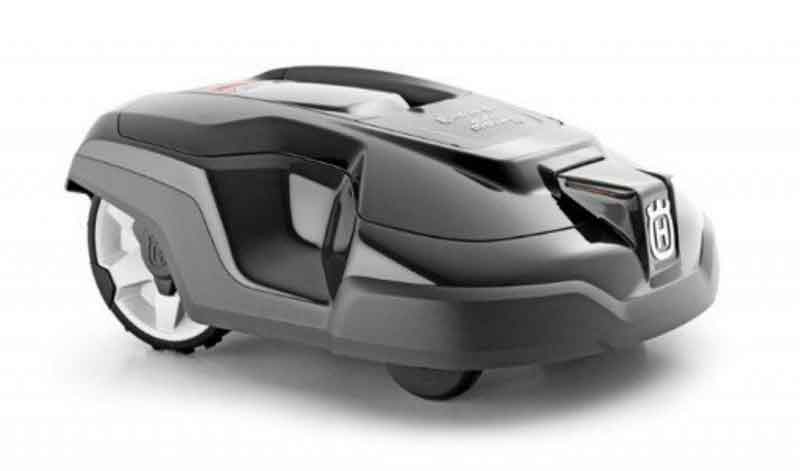
The Silent Revolution in Your Lawn
Imagine this: you’re enjoying a leisurely Saturday morning, perhaps with a cup of coffee on your patio, or maybe you’re catching up on some much-needed sleep. The sun is shining, birds are chirping, and the gentle hum of industry is subtly present, yet entirely unobtrusive. This isn’t the sound of a distant construction site or a buzzing insect; it’s the sound of your lawn being meticulously maintained, without you lifting a finger. You, the homeowner, have embraced the robotic mower, a marvel of modern engineering that promises to transform the age-old chore of lawn care. But as this sleek, silent machine diligently navigates your turf, a question lingers, a shadow of your past routines: “Will I still need to edge?”
For generations, the rhythmic whir of the string trimmer, the satisfying scrape against concrete, and the crisp, clean line it created have been synonymous with a well-kept lawn. Edging was an essential, albeit often back-breaking, part of the equation. It was the finishing touch, the sharp detail that elevated a neatly mowed lawn to one that truly commanded admiration. Now, with a robotic mower autonomously tending to your grass, the very definition of “lawn care” is being rewritten. This isn’t just about replacing one tool with another; it’s about a paradigm shift in how you interact with your outdoor space. You’re no longer actively participating in the cutting process; you’re managing the system. And within that system, the role of edging, a practice deeply ingrained in your gardening habits, is suddenly under scrutiny.
The allure of the robotic mower is undeniable. Think of the reclaimed time, the freedom from the weekly mowing schedule, the reduced noise pollution, and the consistently manicured appearance of your lawn. These machines are designed to operate efficiently, often mulching the clippings back into the soil, promoting healthier growth. They can navigate complex terrains, avoid obstacles, and even schedule their mowing times to suit your lifestyle. Yet, the human element, the ingrained habits and the pursuit of perfection, can be a difficult force to overcome. This article aims to explore the evolving landscape of lawn maintenance with a robotic mower, specifically addressing the persistent question of edging and whether it remains a necessary part of your gardening repertoire. We’ll delve into the capabilities of these robotic marvels, the nuances of their operation, and the practical considerations that will help you decide if the era of the string trimmer is truly behind you.
If you’re considering the implications of purchasing a robot mower and how it might affect your lawn maintenance routine, you might find it interesting to read about other outdoor activities that require minimal effort, such as snowskating. For a deeper dive into the best snowskates available, check out this article on the top 10 best snowskates, where only the bestsellers are reviewed. You can find it here: Top 10 Best Snowskates.
The Autonomous Gardener’s Capabilities
At the heart of the robotic mower’s appeal lies its sophisticated automation. These machines are not simply automated versions of traditional mowers; they represent a fundamental rethinking of how grass is cut. Understanding their capabilities is crucial to assessing the need for supplementary tasks like edging. They are programmed with advanced algorithms and equipped with sensors that allow them to operate autonomously and intelligently within a defined lawn area. This intelligence extends to their cutting patterns, navigation, and even their energy management.
Precision Cutting and Coverage
The primary function of a robotic mower is, of course, to cut your grass. However, they approach this task with a level of precision and consistency that often surpasses manual mowing. Unlike traditional mowers that follow a set path, robotic mowers typically employ a random or pattern-based cutting strategy. This ensures that every blade of grass is cut from multiple angles over time, leading to a more uniform and healthy appearance. The blades are usually smaller and sharper than those on traditional mowers, leading to a cleaner cut that is less damaging to the grass.
Furthermore, their consistent operation means they tackle your lawn frequently, often multiple times a week, depending on the model and your lawn’s growth rate. This “little and often” approach prevents the grass from growing too long, eliminating the stress on the plant that occurs with infrequent, aggressive mowing. The mulching capabilities are also a significant advantage. The finely cut clippings are returned to the lawn, acting as a natural fertilizer and improving soil health. This continuous cutting and mulching contribute to a lusher, greener lawn over time, often requiring less external fertilization.

- [Cut-to-Zero] Cuts cleanly right up to the lawn edge, no manual trimming required
- [Adjustment height]Three cutting height settings: 50 / 60 / 70 mm
- [Easy Clean] IP66-rated for easy hose-down cleaning after edge trimming
- [Compatibility] Suitable for WR341/WR342/WR344/WR346


- Centimeter-Level RTK Cloud Accuracy: Commercial-grade RTK Cloud technology delivers centimeter-level positioning for this robotic lawn mower with no local antenna installation and no additional cloud costs.
- Auto Mapping for More Complete Coverage: Vision AI helps the robot lawn mower understand lawn shapes and boundary types, then automatically maps your yard for smooth paths, closer edge-following, and fuller coverage from day one.
- AI Obstacle Avoidance with Neural Processing: Vision AI recognizes and understands common yard objects, using a trained neural network and up to 10 trillion operations per second to help mowing stay smooth, safe, and uninterrupted.
- Infinite Zone Mowing & App Remote Control: Create unlimited mowing zones, set custom paths, define no-go areas, edit your map, and monitor your remote control lawn mower from the app anytime.
- Reliable Navigation Even in Shade: RTK Cloud provides centimeter-level accuracy in open areas, while V-SLAM sensor fusion with Vision AI helps maintain precise navigation in shaded or partially covered lawn spaces.
- Centimeter-level RTK Cloud Accuracy: Vision Cloud robot lawn mower uses commercial-grade RTK technology delivered straight from the cloud—no local antenna installation required and, above all, without additional cloud costs!
- Auto Mapping that Covers More: Vision AI enables this robot mower to understand any lawn shape and boundary types, automatically mapping your yard with smooth paths, closer edge-following, and fuller coverage from day one.
- AI Obstacle Avoidance: Vision AI not only recognizes objects, but understands them. Powered by a well-trained neural network and processing power up to 10 trillion operations per second, WORX lawn mower robot responds intelligently to keep mowing smooth, safe, and uninterrupted.
- Infinite Zone Mowing & App Remote Control: Manage unlimited mowing zones with custom pathways, define no-go areas, edit your map, and monitor your remote control lawn mower anytime—all under control at your fingertips.
- Reliable Navigation Even in the Shade: RTK Cloud delivers centimeter-level accuracy. In shaded or partially covered areas, V-SLAM–based sensor fusion with Vision AI seamlessly takes over, maintaining precise navigation.

- RTK+4-Eye Vision Accurate Positioning System:Using Full Band RTK along with human-like 3D vision positioning technology enables reliable, high-precision positioning. The ANTHBOT robotic lawn mower employs a dual positioning system to ensure that precise lawn mowing tasks are completed without interruptions, even in areas with weak or no GPS signals, such as under dense trees, eaves, or near buildings
- No Perimeter Wires:Say Goodbye to the Perimeter Cables. Experience hassle-free lawn care with our innovative borderless mowers. Unlike mowers with perimeter cables, which require a complicated setup, our state-of-the-art design lets you start mowing right out of the box. There's no need for installations or dealing with tangled cables—just smooth, precise lawn maintenance. Whether you're a seasoned professional or a first-time user, this mower saves you time and effort
- ACC Hands-free Auto Mapping:ANTHBOT robot lawn mower features advanced AI boundary recognition and Adaptive Cruise Control (ACC) technology, which automatically maps your lawn with precision. Its 4-camera system identifies boundaries and creates optimal cutting routes, greatly improving mapping efficiency and reducing the need for manual intervention. The adaptive edge-following system also makes remote control mapping easier and more convenient
- Intelligent Obstacle Avoidance:300° field-of-view camera with built-in AI algorithms can detect 1000+ types of common objects in the garden to ensure stronger obstacle avoidance capabilities and a higher level of safety.More accurate and timely avoidance of dangerous scenes and ensure a safe distance from animals, providing stronger obstacle avoidance ability and higher safety
- Multi-zone& No-go-zone Management:You can customise the mowing settings for 30+ lawn zones to suit your needs; ANTHBOT provides the flexibility to remotely control and monitor your lawn care in real time via the Smart App; and no-go zones can be set (such as around the swimming pool) for increased safety and accuracy

- Performance, Unleashed: As the first mower to deeply integrate 3D LiDAR SLAM & AI Vision, the Neomow X series leverages long-term, real-world usage and training from users worldwide, laying a solid foundation for the performance leap of the X2 series. Overall operational stability of the X2 series has improved by 80%. We are committed to making the X series a pioneering product in the deep integration of cutting-edge technologies, turning the X2 into a truly intervention-free lawn caretaker.
- LiDAR, Mastered: The X2 series features an upgraded 360° panoramic LiDAR, delivering 10x more point cloud output per second. This allows the robot to achieve highly precise environmental perception, obstacle prediction, inch-level positioning, and intelligent navigation, while remaining stable even in low-light or nighttime conditions without relying on RTK antenna or satellite signal. Its short-range perception performance reaches the level of consumer-grade smart driving systems.
- Connected, Be Pro: The Neomow X2 / SE / LE features a reserved expansion interface for an AI bionic triple-vision camera (sold separately, as needed). With a simple connection, Pro-level features are Activated, including inch-level precision auto-mapping, real-time photo monitoring, seamless edge-cutting algorithms, advanced terrain recognition with real-time decision-making, and over 500 AI-Powered obstacle detection models. More AI features are coming soon, including Alexa integration.
- Grasses, No Challenge: Through extensive research of user reports and mowing data, the X2 models have been fully upgraded with a new-designed cutting platform and power configuration. The more powerful cutting unit effortlessly tackles tough grass types like St. Augustine, Kentucky Bluegrass, Ryegrass, and Bermuda grass. The electric-controlled platform offers height adjustments from 1.18" to 3.35", with 3+1 preset mowing modes that adapt to different mowing needs at each stage.
- Device Safety, All Around: X2 series features a built-in speaker, offering voice prompts at the start, completion, or return to charging of tasks. In anti-theft mode, if lifted, it sounds an loud alarm and sends real-time notifications to the app. If stolen, user can track the GPS location via the "Find My Device" and lock it, ensuring only authorized user can operate it. We encourage installing the charging station indoors, Even without signals, it can return to charge, ready for the next task.

- ⚡【Adjustable mowing height】: The robot mower can adjust the cutting height by remote control. The height of the chassis can be raised or lowered at will. The remote control is flexible and free, and can complete actions such as 360-degree rotation and climbing on the spot.
- ⚡【Mowing Efficiency】: Using a two-piece manganese blade ensures a precise, fine cut that covers the grass and actually helps fertilize the lawn. Adjustable mowing height. Easily start, stop and maneuver your mower with the intuitive remote control for maximum convenience.
- ⚡【Brushless Motor】 - 1600W 24V permanent magnet drive motor provides optimal power and lifespan, improving the performance of your lawn mower's rubber tracks. The combination of a brushless motor and gearbox ensures not only superior performance but also durability that stands the test of time.
- ⚡【Complete after-sales service】: Our professional sales and maintenance teams provide consultation and after-sales support, committed to maximizing equipment performance
- ⚡【Widely Used】: The powerful power is unstoppable, the remote control lawn mower has the ability to climb hills, one machine solves various terrain mowing problems, and is widely used in lawns, yards, reeds, grasslands, hills, terraces, weeds, orchards. Whether you are mowing parks and gardens, waterlogged swamps or dense bush areas, these mowing decks can provide consistent quality.

- Unbeatable Off-road Capacity: With a powerful 165 W four-wheel motor provides exceptional driving capabilities, allowing for 80% slope (38°) climbing. No Matter steep slopes, potholes, rough terrain or tall and thick grass, LUBA 2 AWD X series prevails and won't get stuck.
- Smart Features for Effortless Lawn Care: The UltraSense AI Vision combined with the RTK navigation system ensures mow under the tree without satellite signals. Thanks to the powerful visual positioning, it can precisely recognize lawns and other boundaries, achieves riding-style zero-distance edge cutting.
- Maximum 13000 sq.ft (1200㎡) Per Charge: Featuring a unique dual-blade disk design with a cutting width of up to15.8" (400mm) for efficient and precise mowing. LUBA ensures that every cut is clean, enhancing the overall aesthetic of the lawn,no matter the grass along pathways, flower beds, and fences is trimmed neatly.
- Multi-Zones Management, Intelligent Obstacle avoidance: LUBA 2 AWD 5000HX can manage up 50 mowing areas, including front and backyards, road sides, and no-go zones like pools and flower beds. After automatically recharging, it seamlessly resumes mowing where it last left off. Intelligent obstacle avoidance that recognizes 200+ objects and choose appropriate avoidance strategies.
- Mow Exactly the Way You Want: With 4G/Bluetooth/WIFI connectivity, you can conveniently track LUBA's status anytime, anywhere through Mammotion app. You can select different mowing patterns and designs, planned mowing modes such as Parallel, Checkboard, Diamond Grid. Through the 3D lawn printing technology, adjusts its mowing route, cutting height, and angle through algorithms to create the desired patterns on the lawn, ensuring an ideal result.

- Full-Band RTK and Dual Vision Navigation: 155 satellites and an HDR dual vision system ensure maximum signal stability. The M5 delivers 5x faster connection speeds and 1.5x greater stability. In areas with weak GPS signals , the dual-vision system takes over for centimeter-level precision. Upgradeable to NetRTK or Dual RTK mode as needed.
- Compact Design, Flexible Coverage: The ANTHBOT M5 robotic lawn mower is designed for small to medium yards, covering up to 1/4 acres with a compact body size of just 19.6*15.4 in. This robot lawn mower can easily reach narrow corners and paths where other equipment can't, fitting through spaces as tight as 27.6 in, ensuring every edge and corner of your lawn is perfectly trimmed.
- Powerful Performance for Various Conditions: This lawn mower robot handles slopes up to 45%, clears vertical obstacles up to 1.2’’. Featuring a 7.9’’ cutting width and a continuously adjustable cutting height of 1.2-2.8’’, it adapts to uneven terrain and varying grass conditions. M5 works steadily in diverse yard conditions and features IPX6 waterproof rating for easy daily maintenance and cleaning.
- No Wire, No Fence - ACC Auto-Mapping: Say goodbye to complicated boundary cables. The ANTHBOT robot lawn mower no wire features advanced AI boundary recognition and Adaptive Cruise Control (ACC) technology to automatically and accurately map your lawn. It can accurately identify boundaries and plan the optimal mowing route, significantly improving efficiency and reducing manual intervention.
- Multi-Zone Management & App Control: Connect via 4G/Bluetooth/WiFi and track your robot lawn mower no wire anytime, anywhere through the ANTHBOT app. Easily manage up to 20 working zones, create seamless paths between areas, set no-go zones, and customize your lawn mower care plan. Auto-recharge ensures continuous operation, offering total control and convenience.

- UNIVERSAL COMPATIBILITY: Designed for Husqvarna, Landroid, Sileno+, Mammotion Luba/Yuka, Navimow i‑Series, and most other robotic mowers, this fence gate allows your robot mower to pass through boundary fences and perimeter wires with ease.
- WEATHERPROOF CONSTRUCTION: Made from durable plastic materials built to withstand outdoor conditions, ensuring long-lasting performance in rain, sun, and varying temperatures.
- SECURE MOWING AREA: The hinged flap design keeps your mowing zone safely enclosed while allowing the robotic mower to pass through automatically without manual intervention.
- SIMPLE SETUP: Easy to install on existing fences or boundary walls using the included wall hangers, requiring no special tools or technical expertise.
- FLEXIBLE FLAP DESIGN: Features 8 individual hinged slats that swing open on contact and close automatically, providing a reliable and low-maintenance passage solution.Please check compatibility before purchasing to ensure a proper fit.

- RTK+4-Eye Vision Accurate Positioning System:Using Full Band RTK along with human-like 3D vision positioning technology enables reliable, high-precision positioning. The ANTHBOT robotic lawn mower employs a dual positioning system to ensure that precise lawn mowing tasks are completed without interruptions, even in areas with weak or no GPS signals, such as under dense trees, eaves, or near buildings
- No Perimeter Wires:Say Goodbye to the Perimeter Cables. Experience hassle-free lawn care with our innovative borderless mowers. Unlike mowers with perimeter cables, which require a complicated setup, our state-of-the-art design lets you start mowing right out of the box. There's no need for installations or dealing with tangled cables—just smooth, precise lawn maintenance. Whether you're a seasoned professional or a first-time user, this mower saves you time and effort
- ACC Hands-free Auto Mapping: ANTHBOT robot lawn mower features advanced AI boundary recognition and Adaptive Cruise Control (ACC) technology, which automatically maps your lawn with precision. Its 4-camera system identifies boundaries and creates optimal cutting routes, greatly improving mapping efficiency and reducing the need for manual intervention. The adaptive edge-following system also makes remote control mapping easier and more convenient
- Intelligent Obstacle Avoidance:300° field-of-view camera with built-in AI algorithms can detect 1000+ types of common objects in the garden to ensure stronger obstacle avoidance capabilities and a higher level of safety.More accurate and timely avoidance of dangerous scenes and ensure a safe distance from animals, providing stronger obstacle avoidance ability and higher safety
- Multi-zone& No-go-zone Management:You can customise the mowing settings for 20+ lawn zones to suit your needs; ANTHBOT provides the flexibility to remotely control and monitor your lawn care in real time via the Smart App; and no-go zones can be set (such as around the swimming pool) for increased safety and accuracy
Navigational Prowess and Boundary Management
The intelligence of a robotic mower is most evident in its navigation. To define the mowing area, you’ll typically install a boundary wire around the perimeter of your lawn. This wire, often buried or clipped down, acts as an invisible fence, guiding the mower and preventing it from straying into unwanted areas like flowerbeds, patios, or driveways. More advanced models can even utilize GPS and other sensor technologies for more precise boundary detection, sometimes eliminating the need for a physical wire altogether.
Inside the defined area, the mower uses a combination of sensors to navigate. Bump sensors detect obstacles, causing the mower to alter its course. Rain sensors can detect moisture and prompt the mower to return to its charging station. Some models even feature object recognition, allowing them to identify and avoid garden furniture or toys left on the lawn. This intricate network of sensors and programming ensures that the mower operates safely and efficiently, covering your entire lawn without intervention. The goal is complete, autonomous coverage, leaving no significant patches of uncut grass.
Energy Efficiency and Automated Charging
Robotic mowers are remarkably energy-efficient. They typically run on rechargeable batteries, and their design prioritizes power conservation. When the battery level drops, the mower autonomously navigates back to its charging station, docks itself, and recharges. Once fully charged, it will resume its mowing schedule, ensuring continuous operation with minimal downtime. This automated charging cycle is a key feature that distinguishes them from traditional mowers, which require manual refueling or battery swapping. You don’t need to be present to manage their power needs; the machine handles it all. This level of self-sufficiency is what allows you to truly step away from the direct labor of lawn maintenance. The “set it and forget it” promise, while not entirely literal, is largely delivered through these advanced capabilities.
The Edge of the Lawn: A Historical Perspective
For as long as you can remember, edging has been an integral part of achieving that pristine lawn look. It was the meticulous finishing touch that separated the amateur from the professional landscaper. The sharp, defined lines between your lawn and the surrounding hardscapes – sidewalks, driveways, garden beds – were a testament to your dedication and attention to detail. The tools themselves, the trusty string trimmer or the manual edger, became extensions of your gardening persona.
The String Trimmer: A Familiar Companion
The string trimmer, with its high-speed spinning nylon line, was your weapon of choice for achieving those clean edges. You’d carefully guide it along the concrete or stone, listening to the satisfying whir as it neatly shaved away errant grass blades. It was a process that required a steady hand and a good dose of patience, especially on curved edges or around obstacles. You learned to adjust your grip, your angle, and your pace to achieve the desired result. The aftermath was always rewarding: a stark, defined border that made your lawn stand out. You might even recall the distinct smell of cut grass and the occasional sting of flung debris.
The Manual Edger: For the Dedicated Detailer
For those who preferred a more controlled and precise approach, the manual edger was another favored tool. This often involved a half-moon shaped blade attached to a long handle. You’d press the blade into the soil along the edge of the lawn, working it back and forth to sever grass roots and create a neat trench. It was more labor-intensive but offered a different kind of satisfaction – the feeling of sculpting the landscape with your own strength. It demanded a physical engagement with the task, a direct interaction with the earth and the grass.
The Definition of a Well-Maintained Lawn
These edging practices were not merely aesthetic. They also served a functional purpose. Edging helped prevent grass from creeping onto hard surfaces, which could lead to a messy appearance and potentially damage the surface over time. It also helped to contain the lawn, preventing it from encroaching on flowerbeds or vegetable patches. In essence, edging was a visual declaration of order and control over your outdoor environment. It was a symbol of a well-maintained property, a subtle yet powerful statement to your neighbors and yourself. This ingrained understanding of what constitutes a “finished” lawn is what makes the transition to robotic mowing a mental hurdle for many.
The Robotic Mower’s Edge: Is It Enough?
Now, with a robotic mower humming away, the question arises: does its autonomous operation eliminate the need for manual edging? The answer, as with many things in life, is nuanced and depends on several factors, including the specific model of your robotic mower, your lawn’s layout, and your personal definition of “perfect.”
Boundary Wire and Grass Overgrowth
Most robotic mowers rely on a boundary wire to define their mowing area. While this wire effectively keeps the mower within the designated lawn space, it also creates a small “no-mow” zone directly along the boundary. The mower cannot physically cut right up to the very edge of the wire. The width of this zone can vary depending on the mower’s design, but it is typically a few centimeters. This means that some grass will inevitably grow taller than the meticulously cut grass within the main mowing area.
If you’re accustomed to that razor-sharp line where grass meets concrete, you might find this small strip of slightly longer grass visually jarring. The robotic mower, by its nature, creates a softer transition at the perimeter. It’s not the sharp, almost artificial, clean line that a string trimmer provides. This is where the traditional edging habit kicks in. Your eyes, trained by years of manual maintenance, might still seek that crisp demarcation.
Model-Specific Edge Capabilities
The capabilities of robotic mowers in dealing with edges have been evolving. Some newer, more advanced models are being designed with edge-cutting features. These might involve a specific mowing pattern that allows the mower to get closer to the boundary wire, or even a dedicated edge-cutting blade or function. Some manufacturers are developing “edge-mode” settings that instruct the mower to specifically traverse along the boundary wire.
However, it’s important to manage your expectations. Even with these specialized features, a robotic mower might not achieve the same level of absolute precision as a skilled manual edging job. There can still be a slight discrepancy, and the consistency might not be as absolute across the entire perimeter. You’ll need to research the specific capabilities of your chosen robotic mower model to understand how well it addresses the edge issue. Some are marketed as “edge-capable,” while others make no such claims.
Your Personal Standards of Perfection
Ultimately, the decision of whether you still need to edge your lawn with a robotic mower boils down to your personal standards and expectations. If you are someone who demands an absolutely flawless, razor-sharp edge at all times, then you may find yourself reaching for the string trimmer occasionally. The robotic mower might handle 95% of the job, but that remaining 5% of perfect sharpness might still be something you feel compelled to address manually.
On the other hand, if you are embracing the robotic mower for its convenience and time-saving benefits, you might find that the slightly softer transition at the lawn’s edge is perfectly acceptable. You might redefine what a “well-maintained” lawn looks like, prioritizing the overall health and consistent coverage of your turf over the absolute crispness of the perimeter. It’s a mental shift, a recalibration of your aesthetic goals. You are trading a labor-intensive detail for effortless, consistent coverage.
In exploring the future of lawn care technology, the article titled “How Much Edging Will You Still Do After Buying a Robot Mower?” raises interesting questions about the balance between automation and manual maintenance. As homeowners increasingly adopt robotic solutions for their yards, it’s worth considering how this shift might parallel advancements in other areas, such as delivery systems. For instance, a related article discusses how coffee-delivering drones might soon become a reality, showcasing the potential for automation to transform everyday tasks. You can read more about this innovative concept in the article on coffee-delivering drones.
Navigating the New Lawn Care Landscape
| Metric | Before Robot Mower | After Robot Mower | Change (%) | Notes |
|---|---|---|---|---|
| Weekly Edging Time (minutes) | 30 | 10 | -67 | Robot mower reduces edging time significantly |
| Monthly Edging Frequency | 4 | 2 | -50 | Less frequent edging needed |
| Edging Area (square feet) | 500 | 200 | -60 | Robot mower covers most edges automatically |
| Manual Edging Effort (scale 1-10) | 8 | 3 | -62.5 | Effort reduced due to automation |
| Edging Tool Usage (times per month) | 4 | 1 | -75 | Less reliance on manual tools |
Embracing a robotic mower is more than just acquiring a new gadget; it’s about adopting a new philosophy of lawn care. It’s about delegating a significant portion of the labor and trusting the technology to do its job. This transition involves a shift in your mindset and a willingness to adapt your routines.
Redefining “Lawn Care” for You
As you become accustomed to the quiet efficiency of your robotic mower, you’ll likely find that your definition of “lawn care” evolves. The weekly battle with the mower and trimmer might be replaced by tasks like ensuring the boundary wire is intact, cleaning the mower’s sensors, or occasionally checking the blade sharpness. Your engagement with the lawn shifts from active labor to passive supervision and system management. You become more of a landscape manager than a groundskeeper.
This freed-up time can be repurposed for other enjoyable activities. Perhaps you’ll spend more time gardening, planting flowers, or simply relaxing in your newly immaculate outdoor space. The goal is to enjoy your lawn, not to be enslaved by its maintenance. The robotic mower is a tool designed to enhance your lifestyle, not dictate it. This is the core promise you bought into, and it’s important to let it reshape your expectations.
The Frequency of Manual Intervention
For many robotic mower owners, the need for manual edging becomes significantly reduced, but not entirely eliminated. You might find that you only need to edge your lawn once or twice a season, rather than weekly. This could be for special occasions, or simply when you feel the need for that extra touch of precision. The robotic mower handles the day-to-day upkeep, and you can intervene for those occasional “showcase” moments.
This selective edging still offers significant time savings compared to traditional weekly edging. You’re no longer expending energy on a regular basis. Instead, you’re using your tools for less frequent, more targeted interventions. It’s about efficiency and prioritizing your time and effort. The less frequent manual edging also reduces wear and tear on your edging tools and on yourself.
Obstacles and Unmown Zones
While robotic mowers are designed for excellent coverage, there might still be occasional “unmown zones” or areas where the mower struggles to reach. This could be due to complex garden layouts, steep slopes, or irregularly shaped areas. In such cases, you might still need to use a traditional mower or string trimmer to tidy up these specific spots. This is less about a general need for edging and more about ensuring complete coverage of your entire lawn area.
Furthermore, if you have specific landscaping features like raised flower beds or intricate edging designs, the robotic mower might not be able to perfectly navigate around them. In these instances, manual intervention might still be required to maintain the desired aesthetic. The robotic mower is a fantastic workhorse for large, open lawn areas, but complex landscaping might still demand your personal touch. It’s about understanding the limitations of the technology and supplementing where necessary.
Embracing the Future of Lawn Maintenance
The robotic mower represents a significant leap forward in how we maintain our outdoor spaces. It promises a life with less chore and more leisure, a consistently beautiful lawn without the sweat equity. However, like any new technology, it requires an adjustment period and a willingness to reconsider long-held practices.
The Evolution of Lawn Aesthetics
Your lawn’s aesthetic might evolve as well. You might begin to appreciate the more natural, slightly softer transition at the edges, recognizing that it’s a sign of a healthy, thriving lawn. The obsession with an almost manufactured sharpness might give way to an appreciation for a more organic beauty. The goal is a beautiful lawn, and there are multiple ways to achieve that. The robotic mower guides you towards one of those paths.
Consider the environmental impact as well. Reduced noise pollution from traditional mowers and trimmers, and potentially less reliance on fuel, contribute to a greener approach to lawn care. The mulching capabilities also enhance soil health, reducing the need for chemical fertilizers. Embracing the robotic mower is also an embrace of a more sustainable future for your garden.
Making the Informed Decision for Your Lawn
Ultimately, the decision of whether you still need to edge your lawn with a robotic mower is a personal one. It depends on your specific model, your lawn’s characteristics, and your own standards of perfection. Don’t be afraid to experiment. Try letting your robotic mower do its thing for a few weeks and see how you feel about the results. You might be pleasantly surprised by how little the lack of manual edging bothers you, or you might find that you still prefer that crisp, defined line.
The key is to be informed. Research your robotic mower’s capabilities, understand its limitations, and be honest about your own preferences. The robotic mower is a powerful tool that can significantly simplify your lawn care routine. By understanding its role in the broader context of lawn maintenance, you can make an informed decision about whether that familiar whir of the string trimmer will still be a regular part of your weekend soundtrack, or if you’re ready to fully embrace the silent revolution in your garden. The future of lawn care is here, and it’s up to you to define its edges.
FAQs
1. How much edging will you still need to do after buying a robot mower?
Robot mowers are designed to mow the lawn up to the edges of the yard, reducing the need for manual edging. However, some manual edging may still be required in hard-to-reach areas or along borders.
2. Will a robot mower completely eliminate the need for manual edging?
While a robot mower can significantly reduce the need for manual edging, it may not completely eliminate the need in all cases. Factors such as the layout of the yard, obstacles, and personal preferences may still require some manual edging.
3. What are the benefits of using a robot mower for lawn maintenance?
Robot mowers offer convenience, time savings, and consistent mowing results. They can also help maintain a healthier lawn by mowing more frequently and mulching grass clippings back into the soil.
4. Are there any drawbacks to using a robot mower for lawn maintenance?
Some potential drawbacks of using a robot mower include the initial cost of the equipment, the need for occasional maintenance and adjustments, and limitations in mowing certain areas or terrains.
5. How can I optimize the use of a robot mower for my lawn maintenance needs?
To make the most of a robot mower, it is important to properly set up the boundary wires, regularly maintain the mower, adjust mowing schedules based on grass growth, and supplement with manual edging as needed for a well-manicured lawn.