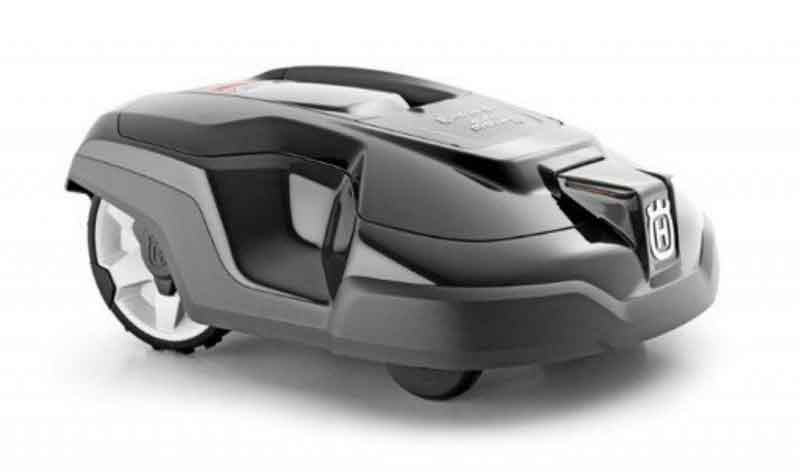
You’ve dreamt of a perfectly manicured lawn, the kind that makes neighbors subtly glance over the fence. But then reality sets in: your yard, a charmingly irregular space, is a satellite signal’s worst nightmare. Trees cast dappled shadows, fences weave a complex tapestry, and the general topography isn’t exactly a flat plane. You’ve heard whispers of robot mowers, those futuristic lawn care companions, but the thought of them struggling to find their way in your satellite-challenged domain feels like a scene from a sci-fi comedy. Don’t despair. While many robot mowers rely heavily on a clear, unobstructed view of the sky for their GPS navigation, a significant number are designed with alternative positioning systems or clever workarounds that make them surprisingly adept at tackling even the most satellite-challenged yards. This guide is your roadmap to finding the perfect robotic mower that will conquer your unruly terrain and give you that effortlessly neat lawn you’ve always desired. Forget the frustrating limitations; it’s time to embrace the future of lawn care, even if your yard prefers to play hide-and-seek with the satellites.
Understanding Satellite Dependence and Its Alternatives
For many robot mowers, a clear view of the sky is paramount. This is because they often employ Global Navigation Satellite Systems (GNSS), a broad term encompassing GPS, GLONASS, Galileo, and BeiDou, for precise lawn mapping and navigation. The satellite signal acts like a digital breadcrumb trail, guiding the mower through its programmed routes, ensuring comprehensive coverage, and helping it avoid obstacles. However, this reliance on an open sky means that areas under dense tree canopies, near tall buildings, or even within the shadow of your own house can become “dead zones.” In these areas, the mower might lose its precise location, leading to missed patches, inefficient mowing patterns, or even getting stuck. This is precisely where your yard’s unique characteristics come into play. The very features that make satellite navigation problematic often necessitate alternative solutions. Manufacturers have recognized this challenge and have developed several innovative approaches to circumvent the limitations of poor satellite reception. These alternatives are the key to unlocking the potential of robotic mowing for yards like yours, transforming a perceived disadvantage into a solvable problem.
The Limitations of GPS-Only Mowers
When you’re considering a robot mower, it’s essential to understand what “GPS-dependent” truly means. These mowers typically use a satellite receiver to determine their position with remarkable accuracy, often down to a few centimeters. This precision is excellent for ensuring every blade of grass is cut and for navigating complex lawn shapes. However, the signal strength can be significantly degraded or entirely blocked by physical obstructions. Think of it like trying to get a clear radio signal during a thunderstorm – the interference is too great. In your yard, these obstructions can be numerous: the dense foliage of mature trees, the imposing presence of a brick wall, or even the metallic reflectivity of a garden shed. When the satellite signal weakens, the mower’s ability to know exactly where it is falters. This can lead to several frustrating scenarios. The mower might repeatedly go over the same areas, creating an uneven cut, or it might stubbornly refuse to enter certain shaded corners, leaving those patches of grass to grow wild. In more extreme cases, a complete loss of signal could cause the mower to stop functioning altogether, displaying an error message and leaving you to manually rescue your errant automated gardener. For a yard with poor satellite reception, a pure GPS-based system is akin to buying a boat without a compass – it might work in the open ocean, but it’s ill-suited for navigating treacherous channels.

- NetRTK + AI Vision + GNSS/INS Fusion Navigation: Built for a wire-free experience, this robotic lawn mower combines NetRTK, AI vision, and GNSS/INS fusion for centimeter-level positioning and intelligent path planning. Enjoy NetRTK with no subscription required. The fusion navigation system helps the mower navigate reliably near trees, buildings, and other challenging signal environments for accurate, continuous mowing right out of the box.
- 0.9-Acre Coverage & 57% Slope Capability: Designed as a robot mower for 0.9-acre lawns, this robot lawnmower covers up to 0.9 acres and handles maximum slopes of up to 57% (30°). With stable performance on gradients up to 40% (22°), the robotic lawnmower maintains reliable traction across uneven ground, hills, and challenging terrain, allowing the robot mower to handle demanding outdoor landscapes with confidence.
- Wi-Fi HaLow Long-Range Connectivity: This robotic lawn mower includes a dedicated auto-pairing HaLow router for plug-and-play setup. Compared with standard Wi-Fi, HaLow delivers longer range, stronger signal penetration, and coverage up to 80,000 sq. m. (about 20 acres) in ideal open areas. It maintains a stable connection for mapping, monitoring, and remote control across large yards and weak-signal areas. Coverage varies by obstacles, terrain, and interference.
- Smart Lawn-Management App: Control your robotic lawnmower from your phone with the LOPKIN App. Schedule mowing sessions, select cutting modes, monitor real-time progress, and manage every zone covered by your robot lawnmower. With automatic mapping, manual drag-to-map, and app-guided mapping, the robot mower makes it easy to create customized zones and mowing plans for different areas of your yard.
- AI Vision Obstacle Avoidance: This intelligent automatic lawn mower uses advanced AI vision to identify and avoid more than 300 common objects, including pets, children, toys, and garden furniture, without relying on physical collision detection. By continuously analyzing its surroundings, the lawn mower robot helps reduce collision risks, allowing the robotic lawn mower to deliver a safer and more automated mowing experience.

- Wire-Free Robotic Lawn Mower with LiDAR Navigation - GOAT A2000 LiDAR PRO is a wire-free robotic lawn mower that requires no perimeter wire or RTK antenna. The HoloScope 360° Dual-LiDAR system automatically maps your yard and delivers precise 2 cm positioning — even under trees, near fences, or in shaded areas where GPS mowers lose signal.
- Built-In Edge Trimming for Clean Borders - Unlike standard robot lawn mowers, this model features an integrated TruEdge trimmer for true edge-to-edge cutting. It trims along driveways, sidewalks, flower beds, and irregular lawn borders — reducing the need for manual string trimming after mowing. (Includes 2 rolls of trimming line, each covering approximately 3km of edging.)
- High-Power 32V Platform for Thick Grass - Designed for American lawns with Bermuda, Zoysia, Fescue, and St. Augustine grass. The 32V motor and dual-blade disc system provide stronger cutting torque and faster blade rotation, helping this robotic mower handle dense, fast-growing grass and uneven terrain.*Compared to previous GOAT models, based on ECOVACS lab testing.
- Fast Charging Robotic Mower for Medium to Large Yards - Equipped with a durable 3.0Ah battery and 113.4W fast charging, this robot lawn mower recharges in about 50 minutes. Ideal for homeowners looking for automated lawn care with minimal downtime and consistent scheduled mowing performance.
- Smart App-Controlled Lawn Mower with Custom Zones - Control your smart lawn mower through the ECOVACS app. Create multiple mowing zones, set no-go areas, adjust cutting height and speed, define travel paths between zones, and customize mowing schedules. Designed for complex yard layouts and personalized lawn care.


- Ideal for Premium Property Owners: The Yarbo Lawn Mower Pro features modular design, strong cutting system and fully automated navigation for low-effort, reliable lawn care. It cuts thick, wet, overgrown grass with ease, suitable for homes, golf courses, turf farms, luxury hotels and resorts.
- 2 Blade Options: Equipped with razor blades and straight blades, Yarbo Lawn Mower Pro achieves highly efficient mowing for both cool-season grasses and damp, thick warm-season grasses, lowering cleaning frequency and boosting continuous working efficiency.
- No More Clogging: Fitted with a 300W dual-motor, optimized cutting disc and high-efficiency grass ejection design, the Yarbo Lawn Mower Pro prevents grass clippings buildup, cuts down cleaning stops and extends continuous working duration.
- Precise Navigation & Obstacle Avoidance: Boasting triple-fusion navigation (RTK-GPS + binocular vision + multi-sensor PPVS), this mower achieves precise positioning. Binocular cameras and ultrasonic sensors detect all obstacles including suspended ones, optimizing paths for safer obstacle avoidance.
- Suitable for Complex Terrain: Equipped with patented multi-terrain tracks and durable all-steel skid shoes, the Yarbo Lawn Mower Pro easily conquers uneven, muddy and stony yards, supporting a maximum 70% (35°) climbing gradient to deliver stable mowing performance on all complex terrains.

- WIRE-FREE SETUP & 0.37 ACRE MAX COVERAGE. Eliminate the exhausting chore of burying perimeter wires. Designed to effortlessly manage up to 0.37 Acre of lawn, this advanced robot lawn mower offers flexible dual mapping options. Choose AI Auto-Mapping powered by Sentisphere technology to effortlessly chart open lawns, or use App-Controlled Manual Mapping to steer the mower like a remote control for custom, hyper-precise boundary tracing around complex garden features.
- FULL-BAND RTK + QUAD-VISION NAVIGATION. Say goodbye to lost signals and erratic wandering. Powered by a premium Full-Band RTK and an industry-leading Quad-Camera AI Vision dual-navigation system, this robot mower maintains pinpoint positioning even under dense tree canopies, near high fences, or in shaded tight corners. It smoothly glides through narrow passages and complex yard layouts, providing stable, continuous coverage.
- PRO-GRADE 4WD & REVOLUTIONARY ACTIVE STEERING. Conquer uneven and challenging terrains with a heavy-duty 4WD drive system that masterfully handles incredible 80% (38.7°) slopes and massive 3.15-inch obstacles. Equipped with an advanced Active Steering System , it turns with unmatched agility without tearing or harming your turf. Paired with a Dynamic Suspension System, it maintains a perfectly stable posture on rugged ground for a flawlessly uniform cut.
- EXPANSIVE 9.49" CUTTING & MULTI-SENSOR OBSTACLE AVOIDANCE. Slash your mowing time with an upgraded, wider 9.49-inch (24 cm) cutting width and a flexible cutting height ranging from 1.57 to 3.54 inches. Driven by a powerful Multi-Sensor Fusion Obstacle Avoidance system utilizing 4 advanced sensors, it intelligently bypasses static garden objects, safely steers clear of humans or pets, and delivers a completely safe, unsupervised, and highly efficient mowing experience.
- SMART APP, INCLUDED 4G & ANTI-THEFT PROTECTION. Take full command with the Roborock App to customize multi-zone schedules, view a real-time progress dashboard, and activate Wildlife-Friendly mode. Combined with a PIN code lockout, a high-decibel alarm, and real-time GPS tracking, you can enjoy ultimate, long-range peace of mind.

- RTK Precision Navigation for Wire-Free, Accurate Mowing. Powered by advanced RTK technology, this robotic lawn mower delivers centimeter-level positioning accuracy without the need for perimeter wires. It follows efficient, systematic mowing paths instead of random movement, ensuring full lawn coverage, cleaner lines, and a consistently even cut.
- CARE Version Upgrade – Extra Blades for Long-Term Performance. The O1000 RTK CARE bundle includes 36 additional replacement blades, significantly extending maintenance cycles and keeping cutting performance sharp over time. Ideal for homeowners looking for lower long-term cost, fewer interruptions, and consistently clean results.
- RTK Extension Cable Included – Stronger Signal, Flexible Setup. Comes with an RTK extension cable that allows optimal antenna placement for improved satellite signal reception. This ensures more stable positioning, better boundary accuracy, and reliable performance, even in complex yard environments with trees or obstacles.
- Smart Auto Mapping & Multi-Zone Lawn Management. Automatically scans and maps your yard, enabling precise multi-zone management through the app. Customize mowing schedules, define different cutting areas, and optimize efficiency for front yard, backyard, and side zones with ease.
- Fully Automated Lawn Care – Set It and Forget It. From intelligent path planning to automatic recharging, the mower handles everything on its own. Enjoy a hands-free lawn care experience, saving time and effort while maintaining a perfectly trimmed lawn every day.

- Bundle C Includes: Replacement Blades + Cleaning Kit
- ALL-WHEEL DRIVE FOR 80% SLOPES: You work hard all week, you shouldn’t have to work hard on your lawn. Reclaim your Saturdays from the back-breaking labor of push mowing. Powered by heavy-duty AWD hub motors, DREAME A3 AWD LiDAR robot mower dominates 80% (38.7°) inclines and 2.17" obstacles that stall ordinary robots. It delivers consistent, professional-grade traction on complex L/U-shaped, wrap-around, multi-zone lawns or rolling hills, ensuring your yard remains pristine
- NO WIRE. NO HASSLE. JUST MOW: Don't waste your weekend burying wire or fighting with an RTK station that won't stay connected. DREAME A3 AWD ai robot mower maps your yard in minutes with 360° LiDAR and Binocular AI vision. And it stays laser-precise—even under heavy tree cover or next to tall walls. Use it at primary residence or summer house. Either way, you "set-it-and-forget-it". It dodges over 300 things—pets, kids' toys, garden hoses—without breaking a sweat
- ONE-TIME BUY. ZERO MONTHLY BILLS: Why pay $300+ a month for lawn care? The DREAME A3 AWD auto lawn cutter is a one-time investment that pays for itself—fast. No crew. No recurring bills. With OmniSense 3.0 navigation and EdgeMaster 2.0 precision, it delivers professional-grade edges within 1.97". Add the optional trimmer module (sold separately). It shrinks the gap to under 1.18". That's basically weed whacker territory. Get that manicured, hired-hand look without the hired-hand price
- LARGE COVERAGE CAPACITY: Designed to handle lawns up to 0.25-0.5 acre with efficient cutting patterns and intelligent navigation, making it suitable for homeowners with expansive outdoor spaces requiring regular maintenance, euipped 5A adapter recharges the A3 AWD robot lawnmower in just 45 minutes—22% faster than industry standards. This ensures your acre lawn is completed efficiently in a single day, leaving your weekends free for family, BBQ, and relaxation instead of lawn maintenance

- 【True 4WD Power for Steep, Uneven Lawns】- Powered by 4WD hub motors, DREAME robotic lawn mowers wire free climbs slopes up to 38.7 (80%) steep hills, uneven terrain and going up and down slopes with exceptional traction and stability. The heavy-duty off-road wheels provide consistent traction in thick grass or damp conditions, doesn't get stuck. Built to handle complex terrain, uneven ground, weirdly shaped, separate lawns and challenging backyard layouts with confidence
- 【 See More. Avoid More. Mow Safer Smarter】- Unlike traditional RTK robotic lawnmower that lose signal near trees, fences or houses, OmniSense 3.0 combines 360 3D High-precision LiDAR with advanced Binocular AI Vision maintains stable precision navigation, instantly maps everything from the ground to trees, avoid over 300 obstacles in real time-no wires required. 240ft long-range detection and smart backup protection, it delivers smooth, hands-free mowing even in complex, obstacle-filled yards
- 【Cut More Lawn, In Less Time】 – Dual floating cutting discs deliver a 15.8 inch cutting width for faster coverage and consistent results. Rush mode tackles up to 8611 sq ft per hour for bigger lawns that need fast, consistent results. Unlike traditional mowers, EdgeMaster 2.0 cuts closer to borders, leaving almost no uncut strips. Get a clean, finished look without going back with a trimmer
- 【Glides Over Obstacles, Won’t Get Stuck】- DREAME automatic lawn mower adopts suspension system allows it to easily drive over roots, curbs and thresholds up to 2.2 inches without getting stuck. From small potholes to barriers, delivering reliable mowing performance across any terrain. Advanced zero-turn maneuverability allows the mower to pivot precisely without damaging grass. It easily handles narrow paths, complex lawn shapes, and tight corners
- 【Smart Mowing for Different Grass Types & Seasons & Lawn Conditions】 – Handles both warm-season grasses and cool-season grasses. With one-tap cutting height adjustment (1-4 inch) in the Dreamehome App, it easily adapts to different grass types and lawn conditions, even tackling dense, overgrown grass up to 8 inch tall. Enjoy a consistently lush, healthy lawn across a wide range of U.S. climates

- Works Anytime, Anywhere: Enables precise positioning and obstacle avoidance without network or satellite signals. Easily passes through passages as narrow as 2.53 ft (77cm). It remains unaffected by obstructions or poor lighting conditions, operating reliably under trees and even at night. No need to bury boundary wires or install RTK stations - ready to use right out of the box. Its simple operation makes it especially user-friendly for elderly users.
- 0.75 Acre. Yes, Just One Mower: Powered by advanced vision and spatial fusion technology, the mower can recognize 200+ types of obstacles. It supports mapping for up to 0.75 acre (32,670 sq.ft / 3,000 ㎡) and ensures consistently inch-level positioning accuracy. You can customize up to 40 areas and set no-go zones such as pools, flower beds, and children's play areas, all of which are accurately recognized by the mower.
- Intelligence in Every Inch: After tens of thousands of tests and algorithm iterations, our intelligent obstacle avoidance system—based on 360° 3D LiDAR and AI Vision fusion—was born. With a powerful AI database, the mower detects objects as small as 5.9 inches (15 cm) high and 0.4 inches (1 cm) wide—like children, pets, or even a hedgehog—and safely avoids them. With positioning error under 0.8 inches (2 cm), it reduces missed lawn spots and achieves 95% coverage.
- Like Crossing Flat Land With Ease: Large front-wheel drive all-terrain wheels easily cross about 1.6 inches (4 cm)-high obstacles, delivering excellent obstacle-crossing performance. The 11 inches (280 mm)-wide floating deck adapts to uneven terrain and features an anti-clog barrier that effectively prevents grass clippings buildup. Adjustable cutting height from 1.18 to 3.35 inches (30 to 85 mm) allows effortless adaptation to various lawn conditions.
- Quietly Gets It Done: Superior to traditional RTK-based solutions, the 3D LiDAR+Vision system allows precise navigation even at night, under trees, or in rain and heavy clouds. Ultra-quiet operation lets it work almost unnoticed. The base station can be placed in a garage or indoors to prevent theft. After recharging, it resumes mowing right where it left off, thanks to breakpoint resume functionality.

- Wire-Free Robotic Lawn Mower with LiDAR Navigation - GOAT O1000 LiDAR PRO is a wire-free robotic lawn mower that requires no perimeter wire or RTK antenna. The HoloScope 360° Dual-LiDAR system automatically maps your yard and delivers precise 2 cm positioning — even under trees, near fences, or in shaded areas where GPS mowers lose signal.
- Built-In Edge Trimming for Clean Borders - Unlike standard robot lawn mowers, this model features an integrated TruEdge trimmer for true edge-to-edge cutting. It trims along driveways, sidewalks, flower beds, and irregular lawn borders — reducing the need for manual string trimming after mowing. (For highly complex corners, narrow gaps, or raised edges, occasional manual trimming may still be needed.)
- Advanced 3D Obstacle Detection for Safer Mowing - Powered by AI Vision and 3D ToF LiDAR, GOAT O1000 LiDAR PRO accurately identifies and navigates around more than 200 types of obstacles — from kids’ toys and patio furniture to pets and small wildlife. With detection precision down to 5 cm, it maintains safe clearance while mowing closely around objects, helping protect your lawn, landscaping, and loved ones.
- Easy App Setup with Custom Zones & No-Go Areas - Use the ECOVACS app to create mowing zones, adjust schedules, and customize no-go areas for challenging sections of your yard. Initial setup and fine-tuning may require a few adjustments to optimize performance for unique lawn layouts.
- Designed for Tight Spaces Others Can’t Reach - Built with a super-narrow body, GOAT O1000 LiDAR PRO easily passes through tight paths and narrow lawn corridors as slim as 0.8 m. Perfect for compact yards, side lawns, and complex layouts where larger robotic mowers struggle.

- 【Smart AI Vision Navigation】The LEBOSBO V3 robotic lawn mower is equipped with AI vision technology that intelligently recognizes obstacles and lawn areas, helping improve mowing safety and efficiency.
- 【32FT Magnetic Boundary Strip Included】Quickly set up no-go zones with the included 32FT magnetic strip. Ideal for blocking off flower beds, pathways, playgrounds, or other areas you want to protect.
- 【Easy APP Operation】Control your robot lawn mower from anywhere using the smart APP. Easily manage mowing schedules, operating modes, and mower status directly from your mobile device.
- 【Plug & Play Without Boundary Wires】No wiring or complicated installation required. Simply charge the mower and begin mowing immediately, making lawn care easier for small yards up to 1600 sq.ft.
- 【Quiet Working & Height Adjustment】The low-noise motor provides quieter operation for residential use. Adjustable mowing height allows flexible grass cutting based on seasonal or lawn care needs.
Exploring Wire-Guided Systems
The most established alternative to pure satellite navigation for robot mowers is the perimeter wire system. This method involves laying a low-voltage wire around the boundary of your lawn and any specific no-go zones (like flower beds or vegetable patches). This wire emits a signal that the robot mower can detect with its sensors. The mower uses this signal to stay within the designated mowing area. Think of the wire as an invisible fence, but instead of keeping a pet in, it’s keeping the mower on track. The beauty of wire-guided systems lies in their reliability, regardless of overhead obstructions. The signal from the wire is strong and localized, unaffected by trees, clouds, or even the curvature of the earth. This makes them an excellent choice for yards with dense tree cover or other natural impediments to satellite signals. The installation process, while requiring a bit of initial effort to lay the wire, is a one-time task. Once in place, you can enjoy the peace of mind that your mower will consistently stay within its boundaries. Furthermore, many wire-guided systems allow for the creation of multiple zones and sub-zones, offering a high degree of control over where and when your mower operates, even in complex garden layouts. The wire essentially creates a self-contained, predictable environment for the mower, ensuring consistent performance no matter what the sky above might be doing.
Hybrid and Vision-Based Navigation
The evolution of robot mower technology has led to increasingly sophisticated navigation systems that combine multiple approaches to overcome environmental limitations. Hybrid systems often integrate perimeter wire guidance with enhanced sensors, allowing for more intelligent obstacle detection and boundary management. These mowers might still use a wire for primary boundary definition but supplement it with internal inertial measurement units (IMUs) and gyroscopes, which help the mower track its movement and orientation even when its primary positioning signal is weak. This internal tracking provides a degree of positional memory, allowing it to continue mowing for a short period or navigate around temporary obstacles without losing its bearings.
Beyond wire augmentation, some of the most promising advancements for satellite-challenged yards come from vision-based navigation. These mowers utilize cameras, often combined with other sensors like ultrasonic or radar, to “see” their surroundings. They can identify edges of lawns, pathways, and even detect obstacles in real-time. By analyzing visual cues, these mowers can create a virtual map of the garden, allowing them to navigate without relying on a consistent satellite signal. This technology is particularly adept at handling irregular shapes and unexpected changes in the environment. While still a developing field, vision-based systems represent a significant leap forward, offering a future where robot mowers can navigate even the most complex and shaded landscapes with remarkable autonomy and intelligence. They learn and adapt to your yard, offering a truly intelligent and adaptable lawn care solution.
If you’re exploring the best robot mowers for yards with weak satellite reception, you might also find interest in our related article on the top gaming laptops available during Black Friday sales. These laptops can be a great companion for managing your smart home devices, including robot mowers. To read more about the latest bestsellers, check out this link: Top 10 Best Black Friday Gaming Laptops.
Top Picks for Satellite-Challenged Lawns
Navigating the world of robot mowers when your yard isn’t a satellite-friendly paradise can feel like a daunting task. However, manufacturers have responded to this challenge with innovative solutions. The “top 52” isn’t about a literal list of 52 models, but rather a comprehensive exploration of the types of features and brands that excel in these conditions. Our focus here is on models that either utilize robust wire guidance, employ advanced hybrid systems, or are pioneering vision-based navigation. You’ll find a spectrum of options, from robust, entry-level wire-guided mowers perfect for simpler, yet satellite-challenged, layouts to sophisticated, AI-driven machines capable of navigating the most intricate gardens. We’ll delve into specific features that make a mower suitable for your needs, such as the complexity of wire installation, the effectiveness of obstacle avoidance in low-signal areas, and the overall intelligibility of the mower’s navigation system when the sky is not its primary guide. The goal is to equip you with the knowledge to select a robot mower that will reliably transform your lawn, regardless of its aerial reception.
Highly Recommended Wire-Guided Models
When satellite signals are unreliable, the dependable perimeter wire becomes your best friend. These models are the workhorses of satellite-challenged yards, offering robust and consistent performance. They require an initial investment of time to lay the boundary wire, but the payoff is a mower that operates reliably, day in and day out, irrespective of tree cover or nearby structures. We’re looking for models that offer user-friendly wire installation, intuitive app controls for managing mowing schedules and zones, and a good reputation for durability and quiet operation. Features like rain sensors, which automatically return the mower to its base in wet conditions, are also highly valuable.
- Husqvarna Automower 400 Series (e.g., 430X, 450X): While some higher-end Husqvarna models incorporate GPS for advanced mapping, their core functionality still relies heavily on the perimeter wire. These mowers are renowned for their robust build quality, exceptional cutting performance, and ability to handle complex slopes and varied terrain. Their smart navigation features can be configured to work effectively even with significant wire guidance. The Automower Connect app offers comprehensive control, allowing you to set mowing schedules, manage multiple zones, and receive status updates. The sophisticated cutting system ensures a consistent, fine mulch, contributing to a healthier lawn. Their resilience to weather conditions and their ability to navigate through narrow passages make them a top contender.
- Worx Landroid M/L Series (e.g., M500, L2000): Worx Landroid mowers are often praised for their user-friendliness and competitive pricing, making them an attractive option for those new to robotic mowing. The wire-guided system is straightforward to install, and the app offers intuitive control over mowing parameters. Many Landroid models also offer optional “Cut to Edge” functionality, which helps reduce the amount of manual trimming required along borders. Their modular design allows for the addition of various accessories, such as rain sensors or GPS modules for enhanced security, though for your specific needs, the reliable wire guidance is the primary draw. They are designed to be relatively compact, making them suitable for smaller to medium-sized yards, and their efficient mowing patterns ensure good coverage.
- Gardena Sileno Series (e.g., Sileno City, Sileno Life): Gardena’s Sileno mowers are another excellent choice for wire-guided excellence. They are known for their quiet operation, making them ideal for residential areas. The installation process is generally straightforward, and the accompanying app provides straightforward control and scheduling. These mowers are particularly adept at handling complex garden layouts and slopes, thanks to their reliable wire guidance. They often feature frost sensors, preventing mowing when the temperature is too low, and are built to withstand various weather conditions. Their reliable boundary detection ensures that they stay within the designated mowing area, providing a consistent cut without intervention.
- Robomow RK Series: Robomow’s RK series offers a premium wire-guided experience. These mowers are known for their powerful cutting motors and their ability to handle larger, more complex lawns. The wire installation is supported by helpful app guidance, and the mowers themselves are designed for efficient navigation and coverage. The RK series often includes features like a “rain sensor” and a “security pin code” for added safety and convenience. Their robust construction and ability to manage slopes make them a reliable option for challenging terrains. The cutting decks on these models are often wider than average, leading to faster mowing times and excellent coverage.
- Stihl iMow R Series (e.g., RMI 422 PC): While Stihl offers some models with GPS, their iMow R series remains a strong contender for wire-guided systems. These mowers are built with the ruggedness and reliability Stihl is known for. They are designed to handle challenging terrain and grass types effectively. The wire installation is typically well-documented, and the mowers are built for durability. They offer a good balance of performance and ease of use, making them a solid choice for those who prioritize a dependable, wire-based solution. Their powerful motors ensure they can tackle thicker grass, and their robust chassis can withstand the rigors of regular use.
Innovative Hybrid and Vision-Based Systems
As technology advances, so do the capabilities of robot mowers. Hybrid systems offer a blend of wire guidance with enhanced sensor technology, while vision-based systems are beginning to offer a truly wire-free future, even in shaded environments. These are often the more cutting-edge options, catering to those who want the most intelligent and adaptable lawn care solution available.
- EcoFlow Blade: The EcoFlow Blade is a standout in the vision-based navigation category. It eschews traditional perimeter wires entirely, relying on advanced AI and camera-based technology to map and navigate your lawn. This makes it incredibly adaptable to complex layouts and areas with poor satellite reception. Its ability to dynamically identify and avoid obstacles, coupled with its intelligent path planning, makes it an excellent choice for yards with numerous trees, flower beds, or irregular boundaries. The setup process is designed to be simpler than wire installation, and its continuous learning algorithm means it gets smarter about your lawn over time.
- Segway Navimow Series: The Navimow represents a significant step forward in wire-free robotic mowing. It uses a combination of GNSS, a vision system, and an array of sensors to create a precise virtual map of your lawn and navigate autonomously. While it does require a satellite signal for initial mapping and precise positioning, its integrated vision sensors provide a crucial fallback and enhance obstacle detection, making it more resilient to temporary signal disruptions. For yards with moderate to significant tree cover, the Navimow’s ability to use visual cues to maintain its position is a major advantage. The setup is generally straightforward, and the app control is intuitive.
- Mammotion LUBA Series: The LUBA series from Mammotion offers a compelling wire-free experience, utilizing RTK-GNSS technology for centimeter-level accuracy, which is further enhanced by its vision sensors. This combination provides a robust navigation system that is less susceptible to temporary signal loss than pure GNSS mowers. The LUBA is designed for larger, more complex lawns and can handle slopes and challenging terrain. Its vision system allows for sophisticated obstacle detection and avoidance, making it a good option for yards with numerous natural obstructions. The app control is comprehensive, offering detailed mapping and scheduling capabilities.
- Ambrogio Robot (Certain Models): Ambrogio is known for its high-end, technologically advanced robot mowers. While many of their models utilize perimeter wire, they also offer sophisticated sensor packages and some with advanced navigation algorithms that can work more intelligently in challenging environments. Look for models that emphasize their advanced sensor arrays, which can include ultrasonic and vision sensors, to complement their primary navigation system. Their premium build quality and cutting performance are consistent across their range.
- YardForce (Select Models with Advanced Navigation): YardForce offers a range of robot mowers, and some of their newer or more premium models are incorporating advanced navigation features. While many are wire-guided, exploring their higher-tier offerings may reveal models with improved sensor suites or hybrid navigation capabilities that make them more adaptable to areas with poor satellite reception. Their focus on user-friendliness and effective mowing patterns makes them a reliable choice.
Factors to Consider for Your Yard
Choosing the right robot mower for a yard with poor satellite reception involves more than just looking at brand names. You need to carefully assess your specific needs and the unique characteristics of your lawn. The complexity of your garden layout, the density of tree cover, the presence of slopes, and even your tolerance for installation work all play a crucial role in determining the best fit. Don’t let the allure of the latest technology blind you to practical considerations. A mower that is overly complex to set up or requires constant intervention will quickly turn your futuristic dream into a frustrating reality.
Lawn Size and Complexity
The sheer size of your lawn is a primary factor. Larger lawns require mowers with sufficient battery life and efficient mowing patterns to complete the job within a reasonable timeframe. For very large or complex yards, a mower with multi-zone capabilities is essential. This allows you to divide your lawn into smaller, manageable areas that the mower can tackle sequentially. Complexity refers to the number of obstacles, flower beds, irregular shapes, and narrow passages. A highly complex yard will benefit from a mower with advanced obstacle avoidance sensors and intelligent path planning. For instance, a wire-guided mower can be programmed with intricate wire layouts to navigate around garden features, while a vision-based mower will use its cameras to dynamically identify and avoid them. Consider the number of turns and tight spots your mower will encounter. Some mowers are better at navigating tight corners than others. If your yard is a labyrinth of flower beds and meandering paths, a mower that can “learn” its environment or use visual cues to navigate will likely outperform one solely reliant on a weak satellite signal.
Obstacle Avoidance and Terrain Handling
In a yard with poor satellite reception, robust obstacle avoidance is paramount. You don’t want your expensive robotic mower becoming intimately familiar with your prize-winning rose bushes or the legs of your garden furniture. Look for mowers equipped with a comprehensive suite of sensors, including ultrasonic, infrared, and contact bumpers. For vision-based systems, the quality and AI processing power of the cameras are critical. These sensors allow the mower to detect obstacles in real-time and adjust its path accordingly. Equally important is the mower’s ability to handle your terrain. If your lawn has slopes, inclines, or uneven surfaces, you’ll need a mower with adequate power and traction. Many wire-guided mowers can handle slopes up to 30-40%, but steeper inclines might require specialized models or supplementary solutions. Check the mower’s specifications for its maximum gradient handling. Consider the type of grass you have as well; some mowers are better equipped to handle thicker, tougher grass varieties.
Installation and Maintenance
The installation process can vary significantly between different types of robot mowers. Wire-guided systems require you to lay a boundary wire, which can be time-consuming, especially for larger or more intricate lawns. However, once installed, it provides a reliable framework. Some manufacturers offer tools and guidance to make this process easier, such as underground wire installation services or cable-laying machines. Wire-free systems, like some vision-based models, often have a simpler setup, focusing on initial lawn mapping through an app. Maintenance is also a consideration. All robot mowers will require occasional cleaning of their blades and chassis. Battery replacement might be necessary after several years. Consider the availability of spare parts and the ease of performing basic maintenance tasks. For wire-guided systems, you’ll also need to consider potential wire breaks due to digging or animal activity, and how easily these can be repaired.
Budget and Long-Term Value
Robot mowers represent a significant investment, and it’s crucial to consider your budget and the long-term value proposition. While entry-level wire-guided models can be more affordable, they might lack some of the advanced features and intelligent navigation found in higher-end units. Conversely, cutting-edge wire-free systems can have a higher upfront cost but may offer greater convenience and adaptability in the long run. Think about the total cost of ownership, including potential maintenance and any accessories you might need. Consider the lifespan of the mower and the availability of software updates for advanced models, which can improve their performance and add new features over time. A mower that can effectively handle your yard’s challenges without constant supervision will ultimately provide greater value and peace of mind.
Making the Right Choice for Your Unique Lawn
You’ve armed yourself with knowledge about the different navigation systems and the specific factors to consider for your satellite-challenged yard. Now, it’s time to synthesize this information and make an informed decision. The “top 52” is a metaphor for the comprehensive understanding you now possess. It’s not just about picking a model off a shelf; it’s about finding the right partner for your lawn care journey. The ideal robot mower for you will seamlessly integrate into your life, tackling your yard’s peculiarities with quiet efficiency, leaving you with the satisfaction of a perfectly maintained lawn without the frustration of technological limitations.
Prioritizing Reliability Over Connectivity
When satellite signal is a concern, reliability becomes the most critical factor. While GPS offers incredible precision in open spaces, its shortcomings in shaded or obstructed areas can be a significant drawback. For your yard, a mower that consistently performs its primary function – mowing your lawn – is far more valuable than one that boasts cutting-edge GPS mapping but struggles to stay oriented. This means leaning towards systems that are less dependent on a clear sky. Wire-guided mowers, with their dependable boundary signal, offer unparalleled reliability in this regard. Even hybrid systems, which might use GPS for initial setup or for specific features, should have robust alternative navigation methods (like vision or internal sensors) that can take over when the satellite signal is weak or absent. Think of it as choosing a sturdy, well-built tool over a sleek gadget that might fail when you need it most.
Considering Future-Proofing and Expandability
While your current yard presents a specific challenge, consider whether the mower you choose offers any degree of future-proofing or expandability. Some manufacturers offer modular systems where you can add features or upgrade components later. For instance, a wire-guided mower might have an option to add a GPS module for enhanced security or theft prevention, even if it’s not essential for its primary mowing function in your yard. For wire-free systems, software updates are crucial. A mower that receives regular firmware updates can improve its navigation algorithms, obstacle detection capabilities, and overall efficiency, ensuring it remains a valuable asset for years to come. If you anticipate any changes to your garden layout in the future, a more adaptable mower, perhaps one with strong vision-based navigation, could be a wise investment.
The Value of User Reviews and Community Support
Don’t underestimate the power of real-world experience. Before making your final decision, delve into user reviews and online communities dedicated to robot mowers. Look for feedback from owners who have yards with similar characteristics to yours – dense trees, irregular shapes, or known satellite reception issues. These reviews can offer invaluable insights into the practical performance of different models in challenging conditions. Pay attention to comments about installation difficulties, the effectiveness of obstacle avoidance, battery life in real-world scenarios, and the general user experience. Community forums can also be a great resource for troubleshooting advice, maintenance tips, and even shared experiences of how owners have successfully adapted their mowers to work in less-than-ideal satellite environments. This collective wisdom can often highlight subtle advantages or disadvantages that might not be apparent from product specifications alone.
If you’re exploring options for maintaining your lawn with minimal hassle, you might find the article on the best robot mowers particularly useful, especially if you have weak satellite reception. These innovative devices can help keep your yard tidy without the need for constant supervision. For those interested in enhancing their outdoor experience, you may also want to check out another article that discusses the top 10 best hangboards, which can complement your outdoor activities by improving your climbing skills. You can read more about it here.
Embracing Your Robot Lawn Care Solution
| Robot Mower Model | Satellite Reception Technology | Max Yard Size (sq ft) | Battery Life (minutes) | Navigation System | Obstacle Detection | Price Range |
|---|---|---|---|---|---|---|
| Husqvarna Automower 450X | GPS Assisted Navigation | 1.25 acres (54,450) | 270 | GPS + Boundary Wires | Yes | High |
| Worx Landroid WR155E | Wi-Fi & Boundary Wire | 1/2 acre (21,780) | 90 | Boundary Wire + Sensors | Yes | Mid |
| Robomow RS630 | Boundary Wire + GPS Backup | 3/4 acre (32,670) | 70 | Boundary Wire + GPS | Yes | Mid-High |
| Greenworks Optimow 10A | Boundary Wire Only | 1/4 acre (10,890) | 90 | Boundary Wire | Basic | Low-Mid |
| Ambrogio L60 Deluxe | Boundary Wire + Gyroscope | 1/3 acre (14,520) | 90 | Boundary Wire + Gyroscope | Yes | Mid |
You’ve navigated the complexities, understood the technologies, and identified the crucial factors for your satellite-challenged yard. The journey to a perfectly manicured lawn with a robotic mower is well within your reach. It’s about making a choice that prioritizes reliability, functionality, and long-term satisfaction. The “top 52” is no longer an abstract number but a testament to the diverse and capable solutions available. Your yard, with all its unique charm, is ready for its robotic transformation. Embrace the quiet hum of efficient lawn care and enjoy the effortless perfection you’ve always desired, proving that even the most satellite-resistant yards can benefit from the marvels of modern robotics.
FAQs
1. What are robot mowers?
Robot mowers are autonomous lawn mowing machines that are designed to cut grass without human intervention. They use sensors and GPS technology to navigate and maintain your lawn.
2. Why are robot mowers beneficial for yards with weak satellite reception?
Robot mowers are beneficial for yards with weak satellite reception because they often come equipped with advanced navigation systems that do not rely solely on GPS signals. This allows them to still effectively mow the lawn even in areas with poor satellite reception.
3. How do robot mowers navigate without strong satellite reception?
Robot mowers can navigate without strong satellite reception by using alternative navigation technologies such as boundary wires, ultrasonic sensors, and gyroscopes. These technologies help the robot mower stay within the designated mowing area and avoid obstacles.
4. What features should I look for in a robot mower for a yard with weak satellite reception?
When choosing a robot mower for a yard with weak satellite reception, look for features such as advanced navigation systems (like boundary wires and sensors), adjustable cutting heights, weather resistance, and a reliable battery life.
5. Are there specific robot mower models recommended for yards with weak satellite reception?
Yes, there are specific robot mower models that are recommended for yards with weak satellite reception. Some popular options include the Husqvarna Automower 315X, Worx WR140 Landroid, and Robomow RS630. These models are known for their advanced navigation systems and ability to work effectively in areas with poor satellite reception.